


Walking Distance: 28,9 Km.
Date of Walking: 18 December 2022
Walking Route: Alçı Tepe-X Bay-Bakery Beach-W Beach-Helles-Seddülbahir-Morto Bay-Çanakkale Martyr’s Monument-Kerevizdere-Kanlıdere Cemetery-Şahindere Cemetery-Behramlı
The Wind from the West
As dusk began to fall at the end of the fourth day, we finally reached the village of Alçıtepe. It didn’t take long before we found a modest place to stay the night: Gürbüz Pansiyon. The room was simple — two single beds, a tiny kitchenette, and a compact bathroom. On any other occasion, I might have hesitated to stay somewhere so plain. But after days on the road, the longing for a real bed and a warm shower transformed this humble space into a five-star suite in my eyes.
That evening, we dined at a small local eatery nearby. I can still recall the taste of the steaming lentil soup we started with, followed by a plate of Tekirdağ-style köfte. Although the past four days had been filled with generous offerings from kind strangers along the way, that particular meal was something else. It didn’t just warm my body — it warmed my soul.
The next morning, after paying for the room, I said goodbye to the young man running the pansiyon, who looked to be in his thirties. Before we parted, I hinted that we might return later that evening — as our destination for the day was Behramlı, a village where the chances of finding accommodation were slim.
We set off into the fifth day greeted by the fierce howling of a strong westerly wind. As I passed through the heart of Alçıtepe, the gusts seemed to stir not just the trees, but my very thoughts. I knew that I would be walking near the coast for most of the day and had anticipated the unrelenting wind. I had come prepared — wrapped in my windproof jacket, I pressed forward.
I’ve always wondered why Alçıtepe was once called “Kirte.” According to some sources, it was named by the local Greek population after their homeland, “Kirithia” in Greece. That name — Kirte — would later mark this land during the Gallipoli campaign, etched into the annals of war.

The route ahead would take me across some of the bloodiest grounds of the Gallipoli land battles — Sığındere and Kerevizdere among them. The memorials I would soon pass stood not merely as stone markers, but as the silent witnesses of a war that forever changed the fate of nations.
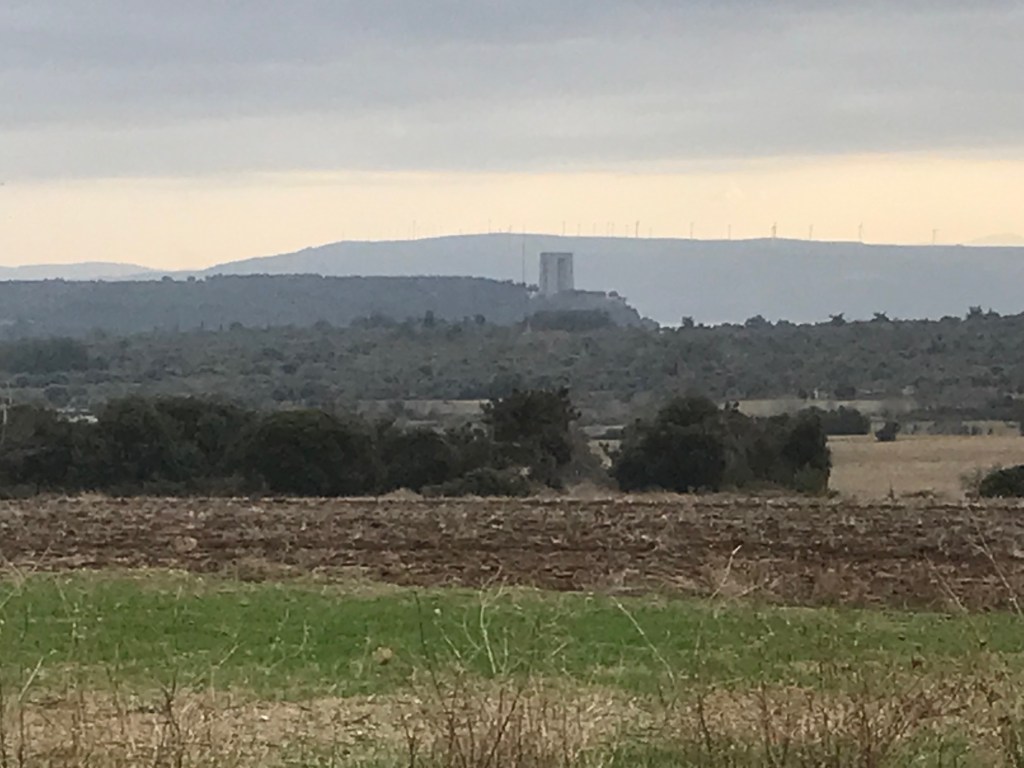
Shortly after leaving Alçıtepe, I noticed the road gradually turning toward the coast, its direction made clear by the increasing ferocity of the wind. The terrain here was bare, save for the occasional lonely tree. Gone were the pine forests of the previous days. Instead, the landscape opened up to wide fields and olive groves. In the distance, rising solemnly at the entrance of the Dardanelles, stood the Çanakkale Martyrs’ Memorial — a silhouette both proud and mournful on the southwestern horizon.
Through the Fields of Kirte — Echoes of the Fallen
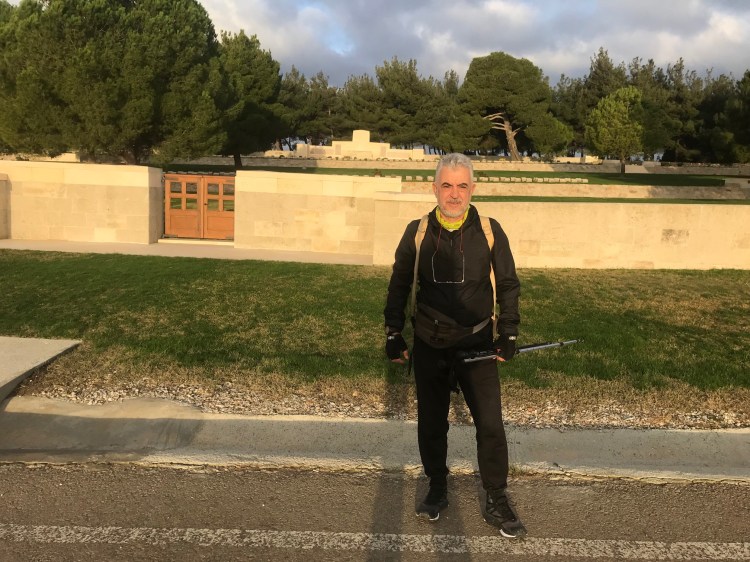
After moving past Twelve Tree Cemetery, still with my head slightly bowed, I continued southwestward. The vast fields stretched out before me, like a canvas that had quietly absorbed the weight of human pain and buried memories deep beneath its soil. As I looked over this broad and solemn expanse, I realised I had reached the western edge of the Gallipoli Peninsula.
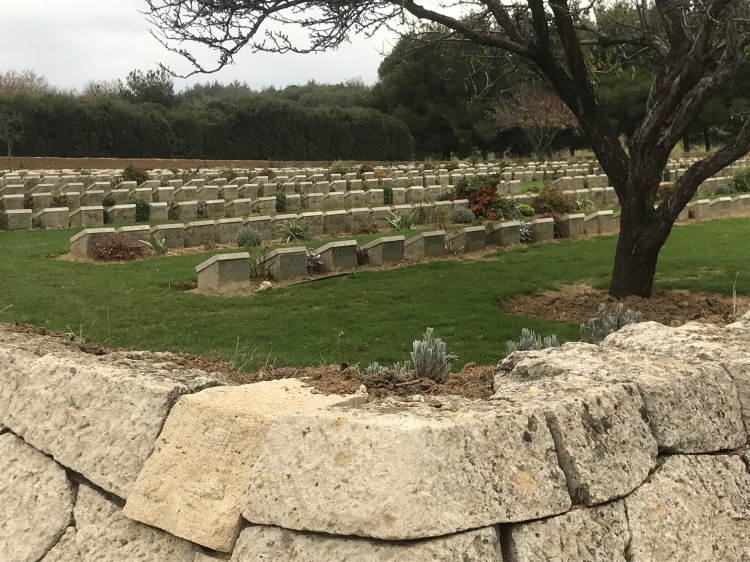
Just before arriving at the shores of Sığındere, I came upon another British graveyard: Pink Farm Cemetery. As I neared the coastline, the terrain here was markedly different from the geography around Anzac Cove. The land rose steeply from the sea, allowing me a clear view of the northern shoreline from where I stood. This stretch of land — fractured, jagged, and torn by deep ravines — sat about fifty metres above the crashing waves below, offering a vista as breathtaking as it was sobering.
Continuing southwest, I soon caught sight of X Beach — also known as Twin Bay. Watching the waves smash against the rocks far below, I couldn’t help but question what sort of military logic had inspired the British to attempt a landing here. From a soldier’s perspective, it felt like an operation destined to fail — a near-suicidal act. And the heavy losses endured here would seem to confirm that. Thousands of young lives ended on these cruel shores. I found myself wondering how those who planned these assaults justified them to their people back home. No doubt they wrapped each death in noble words and wrapped every fallen soldier in the cloak of heroism.
As I pressed on, the coastline opened further. I could now see Tel Bay and Tekke Bay coming into view. As I continued southwest, Lancashire Landing Cemetery appeared before me, and just to its west, the Tekke Bay Kadiri Martyrs’ Memorial stood solemn and proud. Not much further on, the land curved gently into what once was W Beach — the very point where British troops from Lancashire first made their landing.
Where the Dagger Was Planted — Reflections at Cape Helles
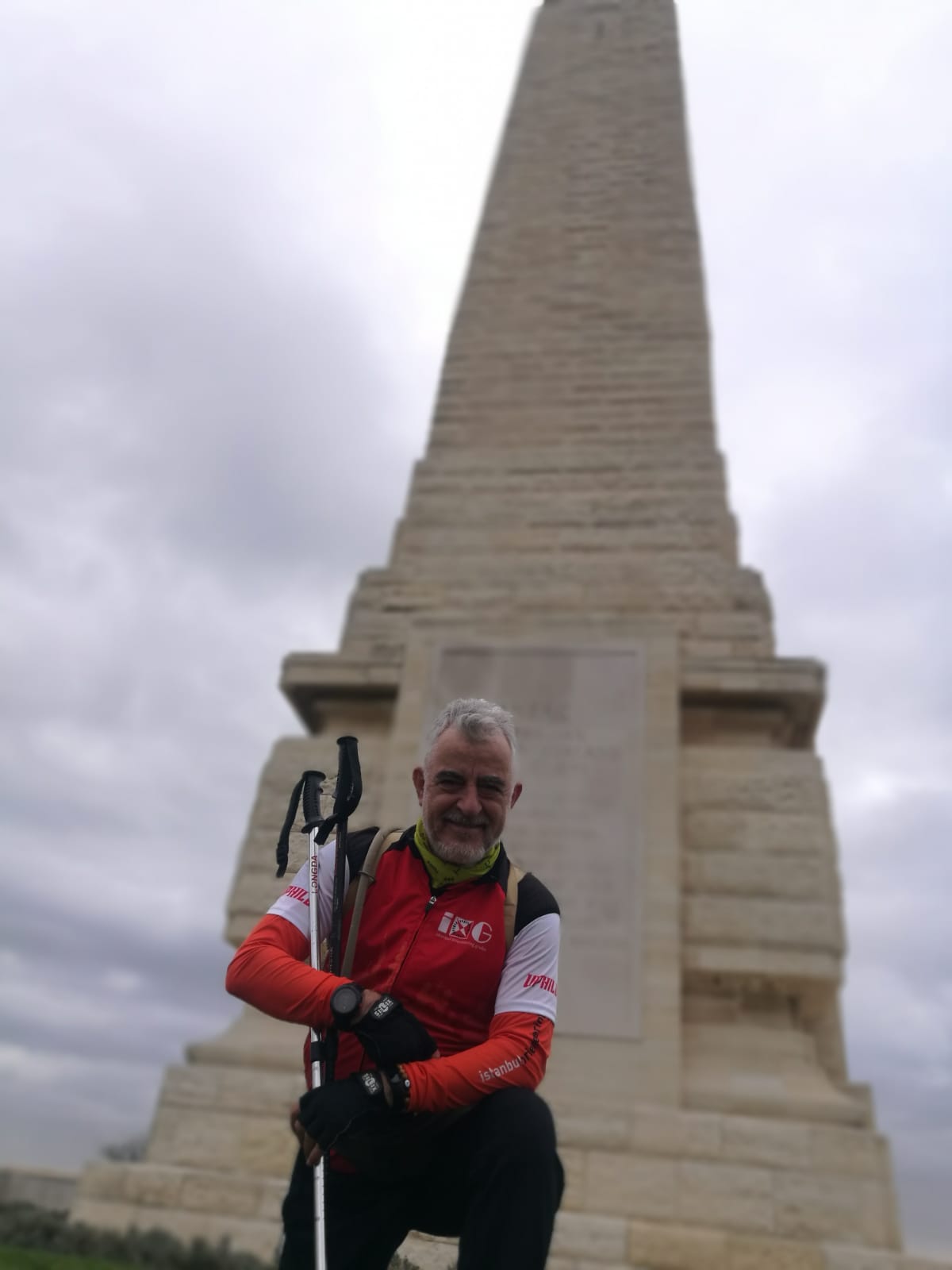
As I neared Ertuğrul Bay, the towering column of the Helles Memorial suddenly appeared on the horizon. I had first learned — years ago during a field visit with the Turkish Military Academy — that this monument was far more than just a pillar of stone.
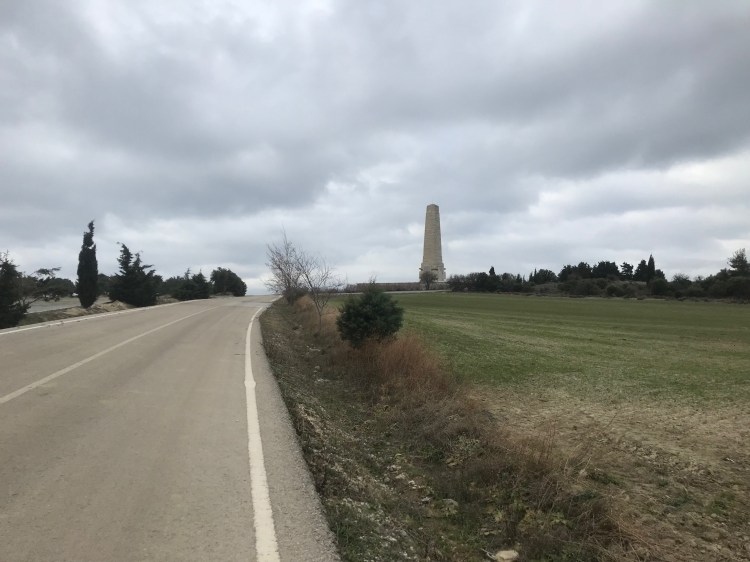
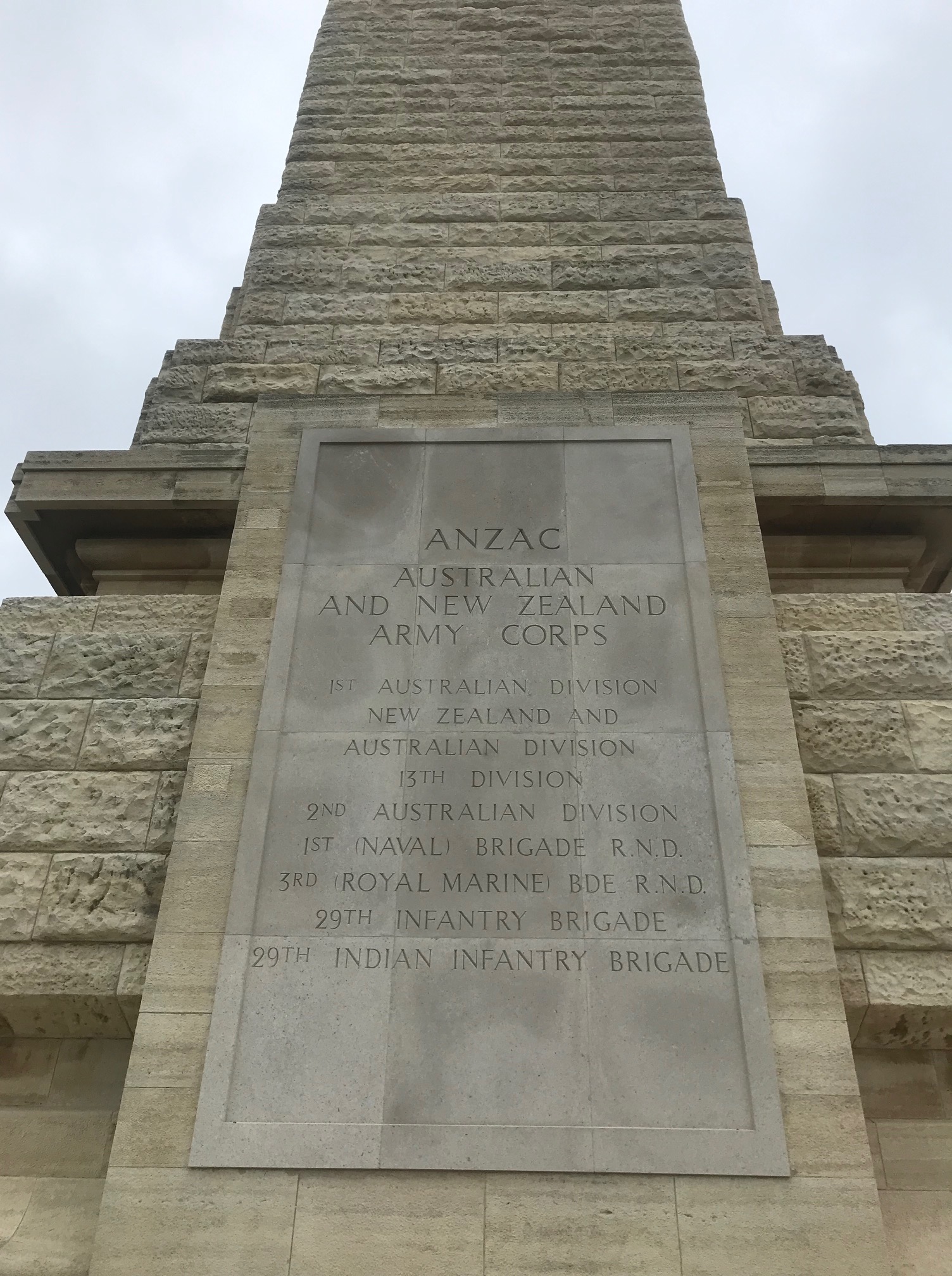
Built atop Gözcü Baba Hill, it stands as the largest British memorial on the Gallipoli Peninsula. During the battles of the Seddülbahir Front, the British had named this area Cape Helles, and thus the monument too was called the Cape Helles Memorial. The name Helles itself is derived from Hellespont, the ancient name for the Dardanelles. That etymology didn’t surprise me — what did surprise me, however, was the symbolism embedded in the monument’s design.
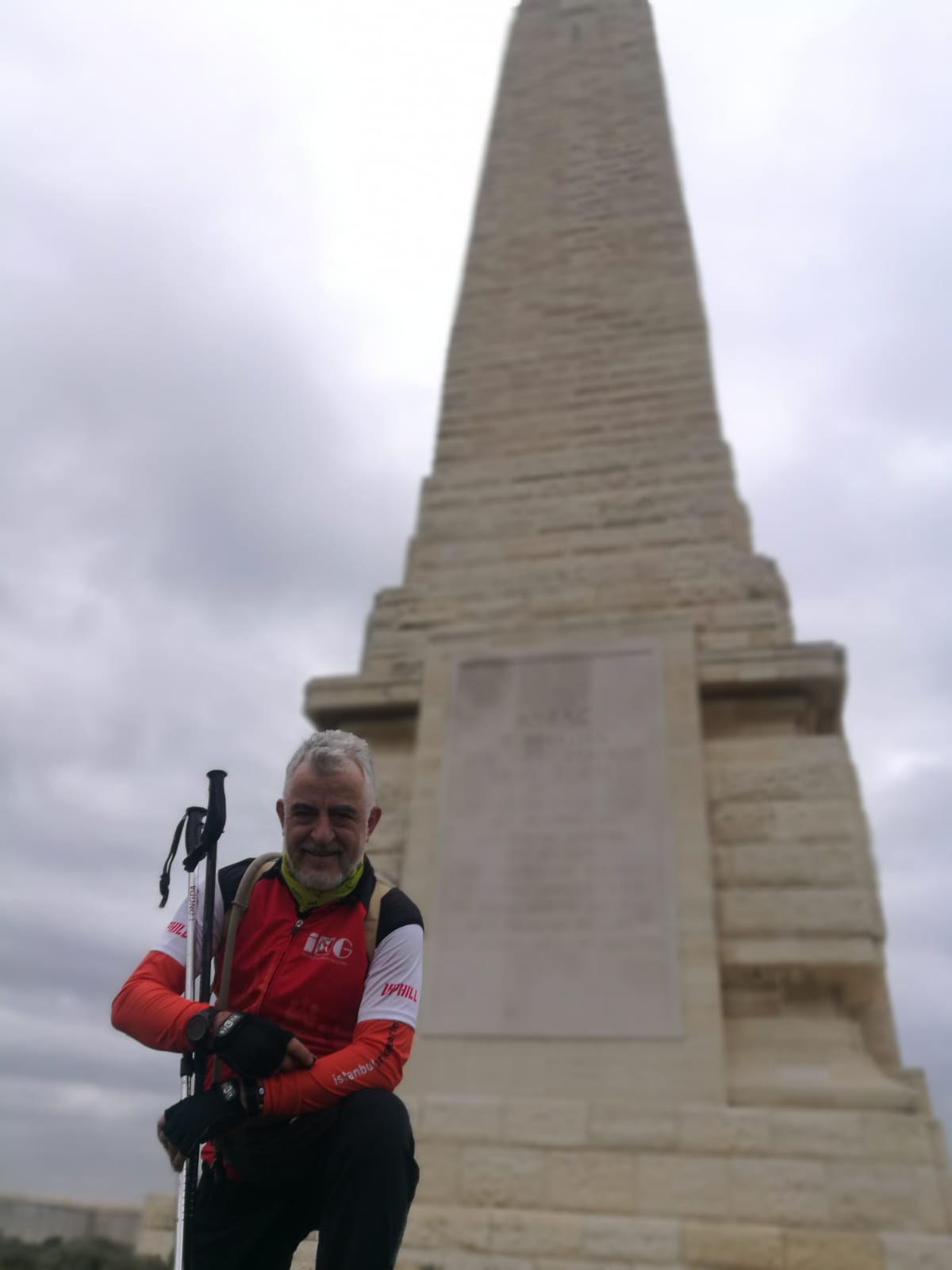
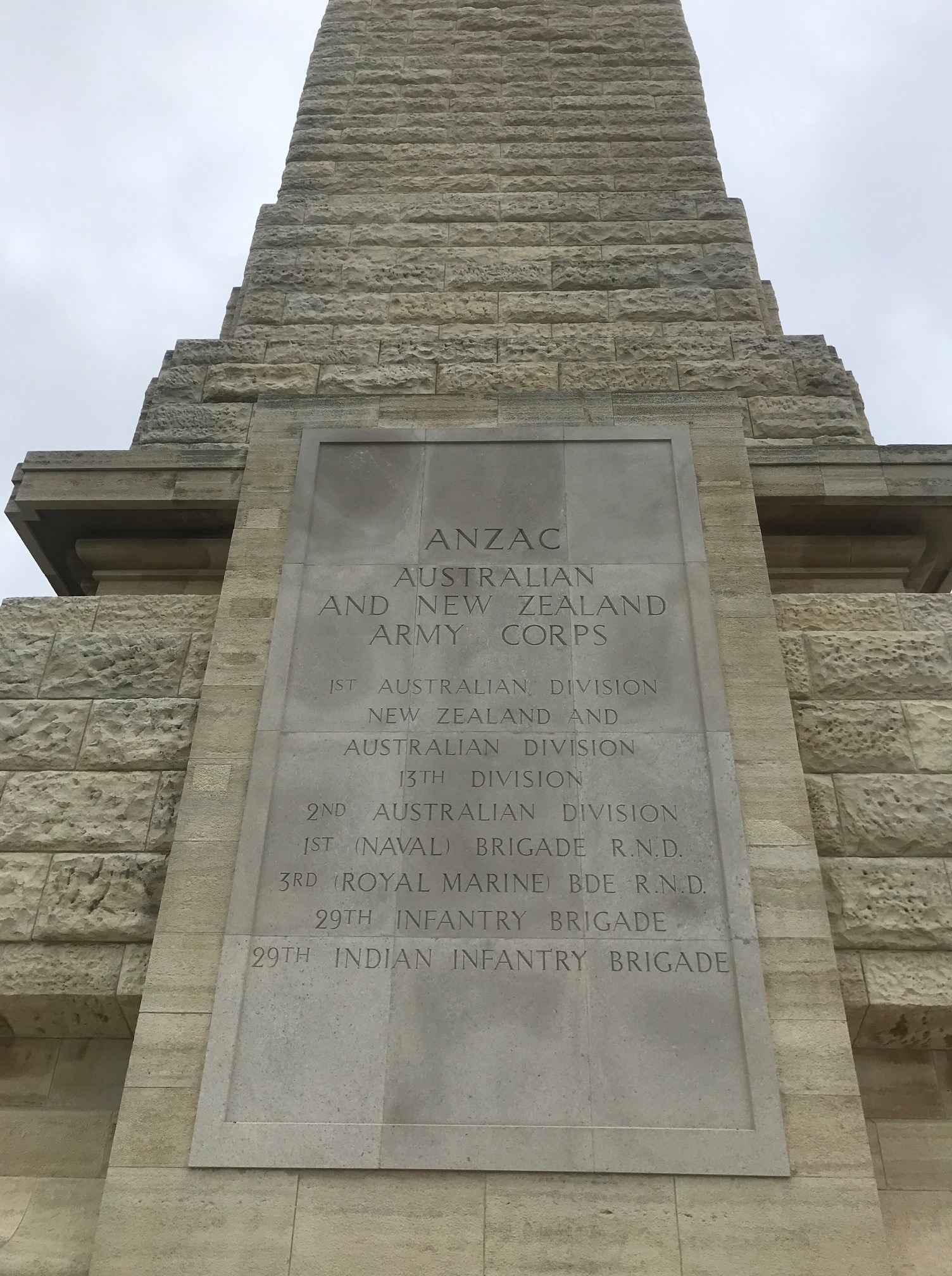
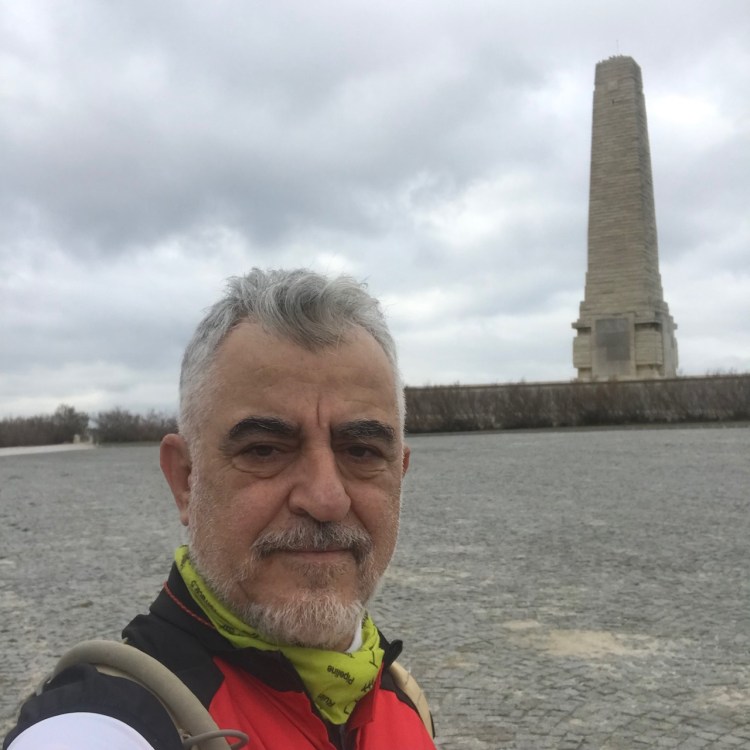
Rising 32.9 metres above a two-thousand-square-metre platform, the structure was not merely an architectural marker, but a symbolic gesture. The British had shaped it in the form of a dagger’s hilt — as if to say: “Despite defeat, we have plunged our dagger into these lands, and this dagger now bears witness to the 20,763 British and Allied soldiers who perished here.”
But for me, that symbol carried a very different meaning. Beyond the misguided metaphor of a dagger, I saw a far deeper truth: that the real victims of this war were not empires or symbols, but the young men who were sent to die — pawns sacrificed to the ambitions of prideful politicians and the careers of vain generals. As I walked among the inscriptions carved into the stones around the memorial, I was struck by how each loss was offered up as though it were a badge of honour. It didn’t just sadden me — it made me quietly furious.
As I’ve written before, the Gallipoli Campaign all but wiped out an entire generation of bright, hopeful young Turks. The weight of that loss still lingers in today’s Türkiye. So, the lofty phrases etched here in memory of those who travelled from afar to die on my homeland’s soil failed to move me. War, I know, will always be with us — as long as humanity walks the earth. But what truly matters is that those who are made to fight understand why they are fighting — and for what. Even today, I find it impossible to answer whether the families who send their sons and daughters to the front ever fully grasp the true necessity of the wars their children are made to fight.
The real architects of war are those chasing power and prestige — politicians intoxicated by control, and generals seeking glory at any cost. The scene before me, at the southernmost tip of Gallipoli, was the perfect embodiment of that bitter truth.

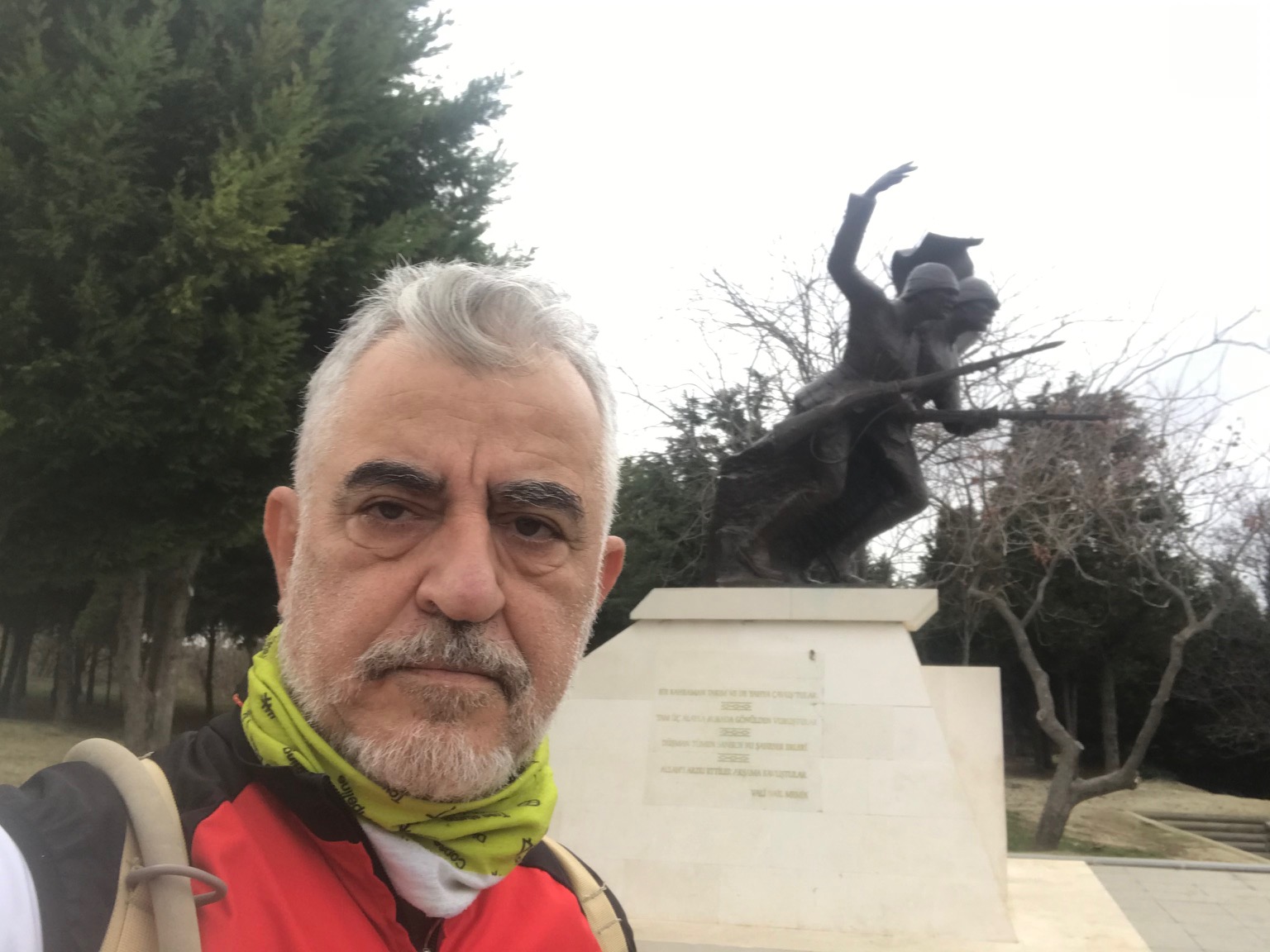
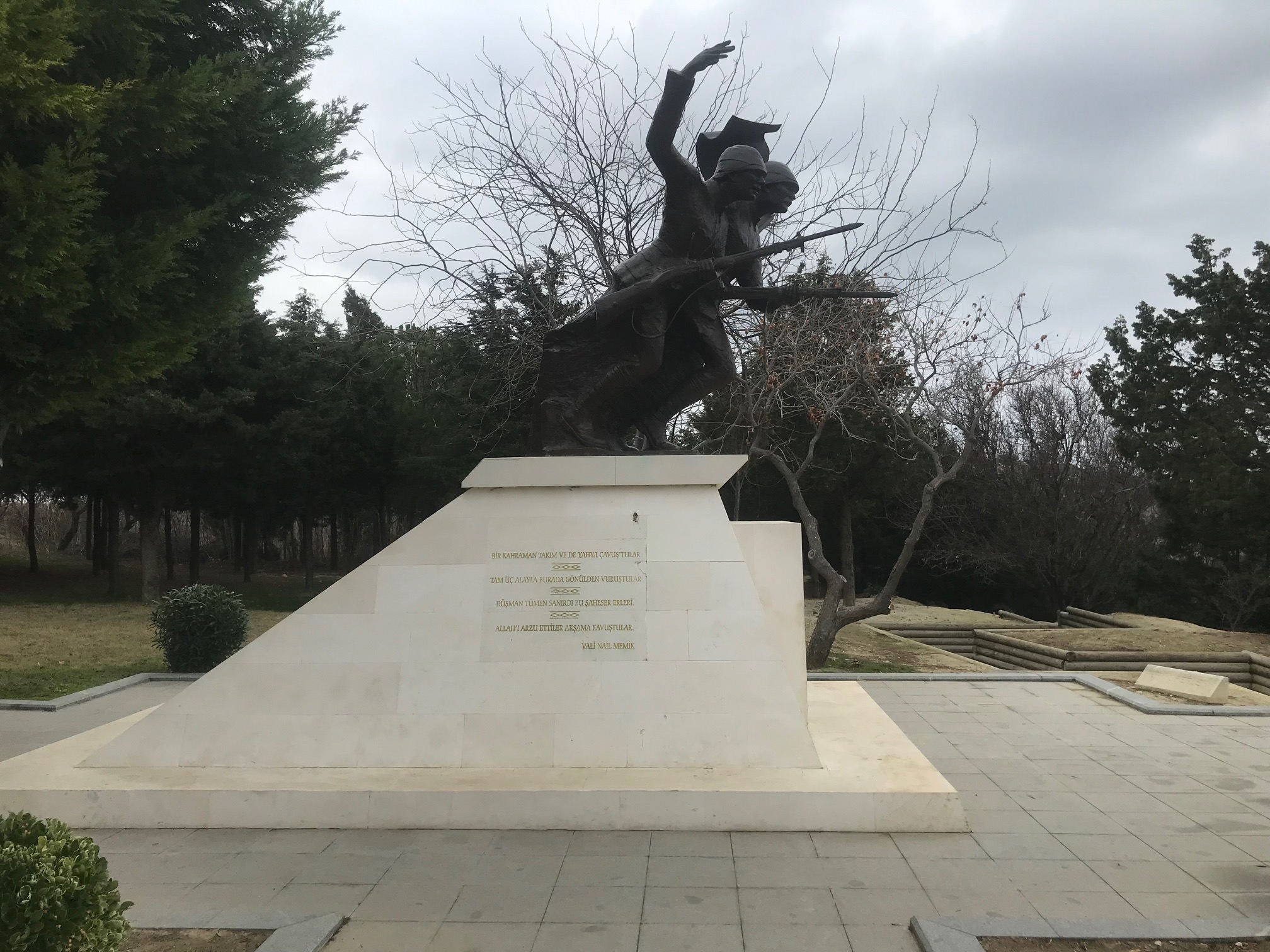
After a short pause at the Helles Memorial, I turned my steps toward the shores where the heroic 26th Regiment had fought with unwavering resolve against British and French landings. Ertuğrul Bay unfolded before me in all its solemn grandeur. There, too, stood the hallowed trenches — soaked in the blood of Yahya Çavuş and his comrades, now sacred ground. I visited our memorial. With my head bowed and my heart resting in the palms of my hands, I offered my silent respect. Then, without a word, I turned and made my way toward the village of Seddülbahir.
The Village’s Quiet Witness — Under the Mulberry Tree
I don’t know if the village was as silent during the fiercest days of battle as it is now. But today, it seemed withdrawn, like an old soul trying to hide its scars. When I reached the heart of the village, I stopped beneath the shade of a mulberry tree.
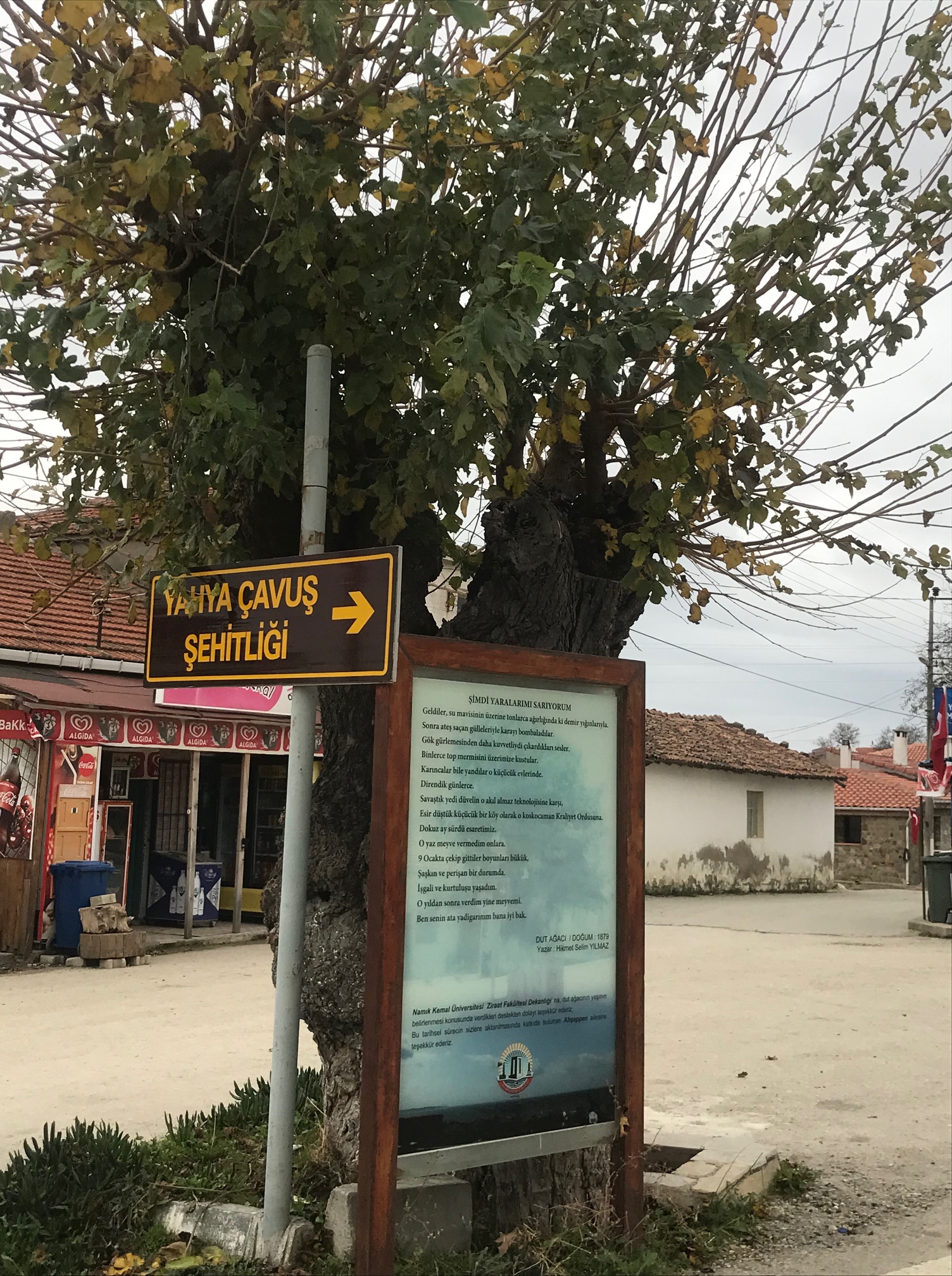

A weathered sign stood before it, bearing a poignant poem by poet Hikmet Selim Yılmaz — a haunting echo of the past that still whispers into the present:
Mulberry Tree- Now, I Am Healing My Wounds
They came, with tons of iron heaps upon the blue water.
Then they bombarded the land with fiery shells.
The sounds were louder than thunder.
Thousands of shells rained down upon us.
Even the ants burned in their tiny homes.
We resisted for days.
We fought the unimaginable technology of the seven empires.
We fell captive, a tiny village, to that vast royal army.
Our captivity lasted nine months.
That summer, I bore no fruit for them.
On January 9th, they left — heads bowed low,
Stunned and broken.
I lived through occupation and liberation.
Since that year, I have borne fruit again.
I am your ancestor’s heir — treat me well.
This poem alone spoke volumes of the immense suffering held deep within the heart of such a small village.
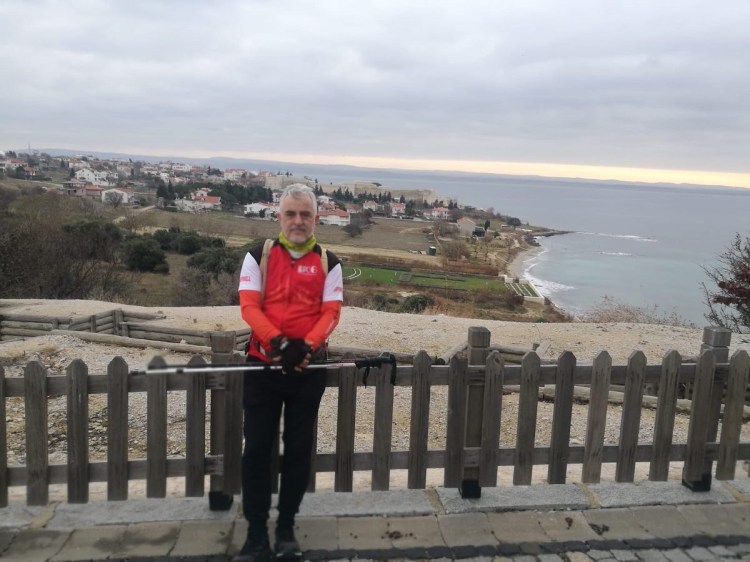
The brave sons of the 26th Infantry Regiment had fiercely delayed the enemy here for 32 and a half hours, slowing down British and French forces and causing them to be pinned to these shores for 8 and a half months. As the Great Leader Mustafa Kemal Atatürk said, “They left just as they came.” Walking in the footsteps of their epic resistance added a meaning to my journey far beyond that of a simple traveller.
A Pause at Seddülbahir and the Journey to the Martyrs’ Memorial
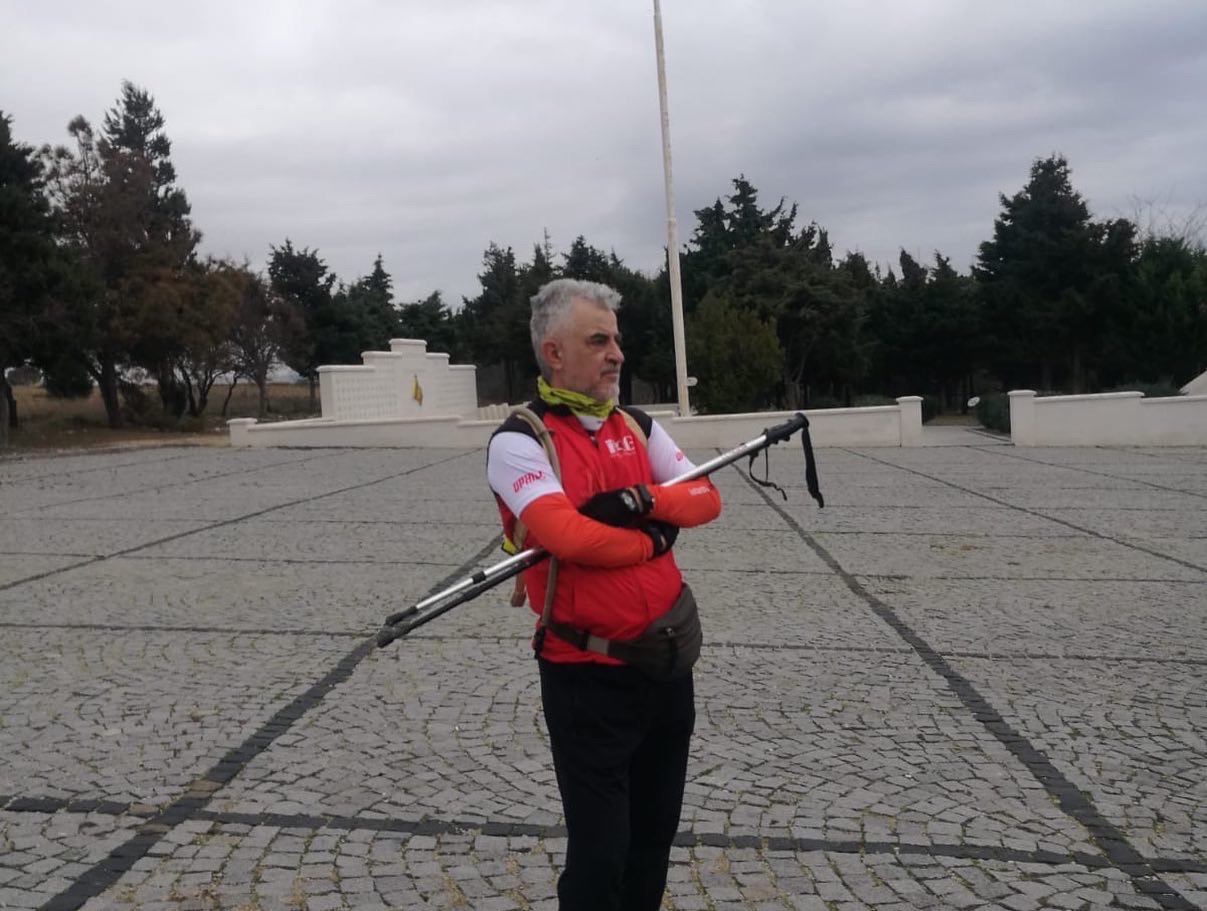
After a brief stop at Seddülbahir, I turned my steps toward the entrance of the Dardanelles. Ahead lay about an hour’s walk. My destination was the Çanakkale Martyrs’ Memorial. To ensure Tamer could follow, I chose the narrow, single-lane northern path lined with pine trees, tracing a wide circle to reach the monument’s grounds.
Along the way, I encountered a group of around fifty motorcyclists who had visited earlier. Their horns saluted me, and the simple gesture stirred an indescribable joy and emotion deep within. That greeting felt like one of the sincerest responses to this quietly solemn journey of mine.
But the real surprise awaited me at the Martyrs’ Memorial itself. The area was closed to visitors due to ongoing natural park and cemetery maintenance work. Not only I, but also groups of students and local tourists from all over Turkey stood there, equally stunned.
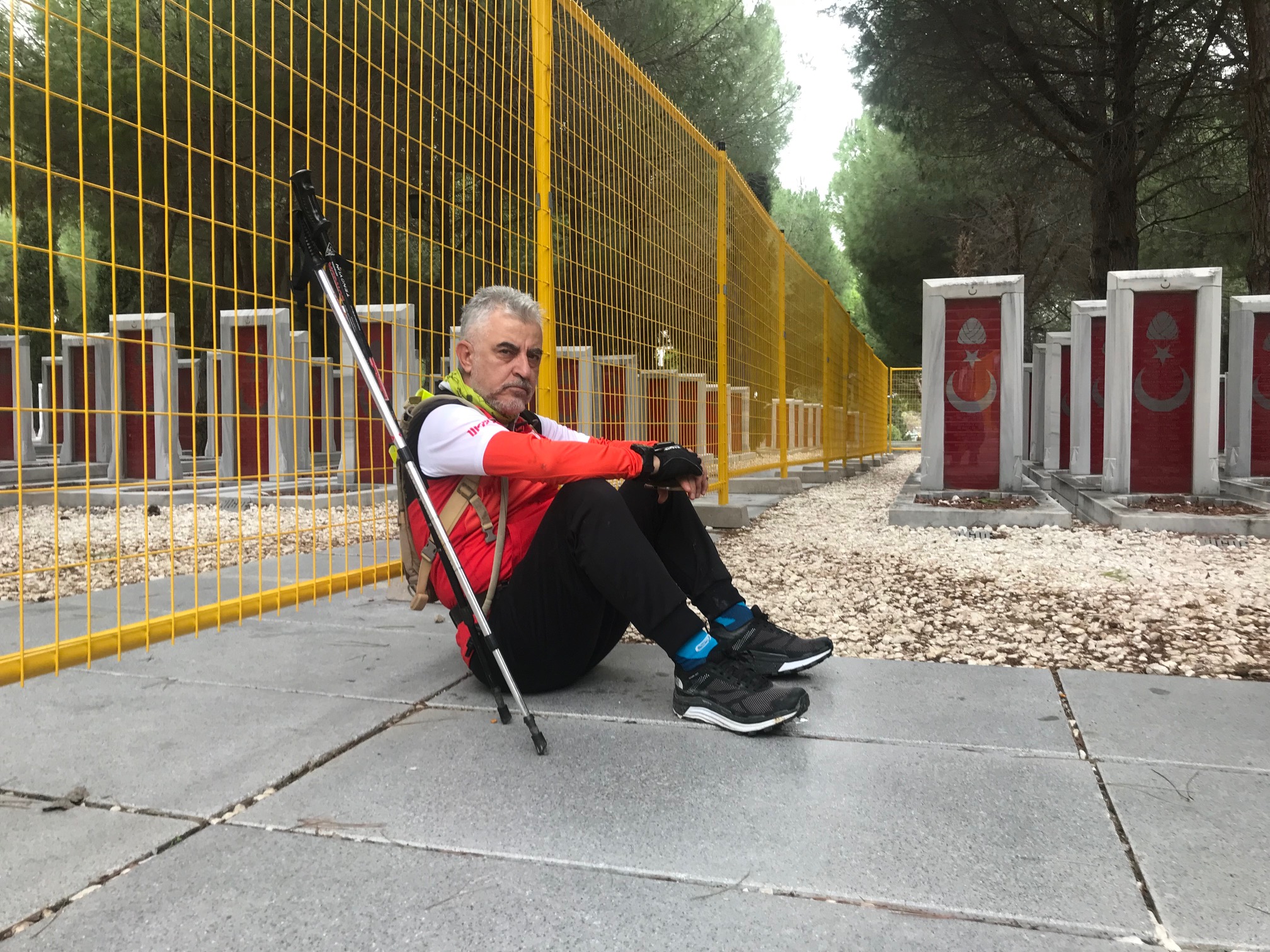
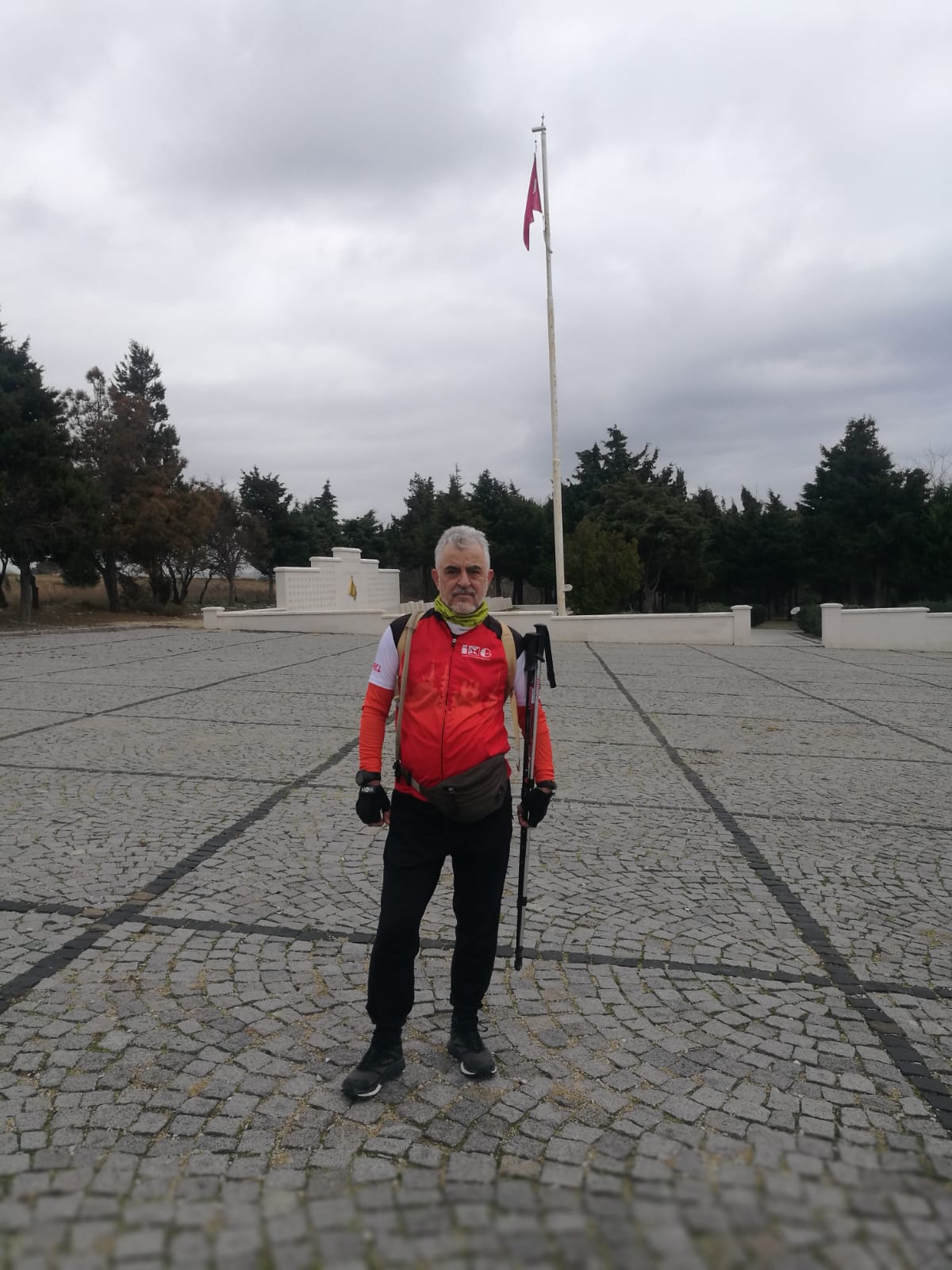
Just as I regularly monitored weather forecasts for my route, I had carefully checked local authorities’ websites to verify whether the sites I planned to visit were open or closed. Yet neither the Çanakkale Governorship, nor the municipalities of Gelibolu and Eceabat, nor the official websites of the cemeteries had issued any notice regarding the closure due to renovations.
Such careless neglect toward a place so sacred and symbolic deeply pained me. Of course, I intended to share this incident on social media later to draw attention from the responsible authorities. Gallipoli did not deserve neglect — it demanded a respectful memory.
We spent about half an hour at the memorial grounds. After resting and grabbing a bite with Tamer, I resumed my walk toward Alçıtepe. My goal was to reach Behramlı via Alçıtepe and conclude today’s stage there.
Encounter with Kemal the Shepherd and Arrival at Behramlı
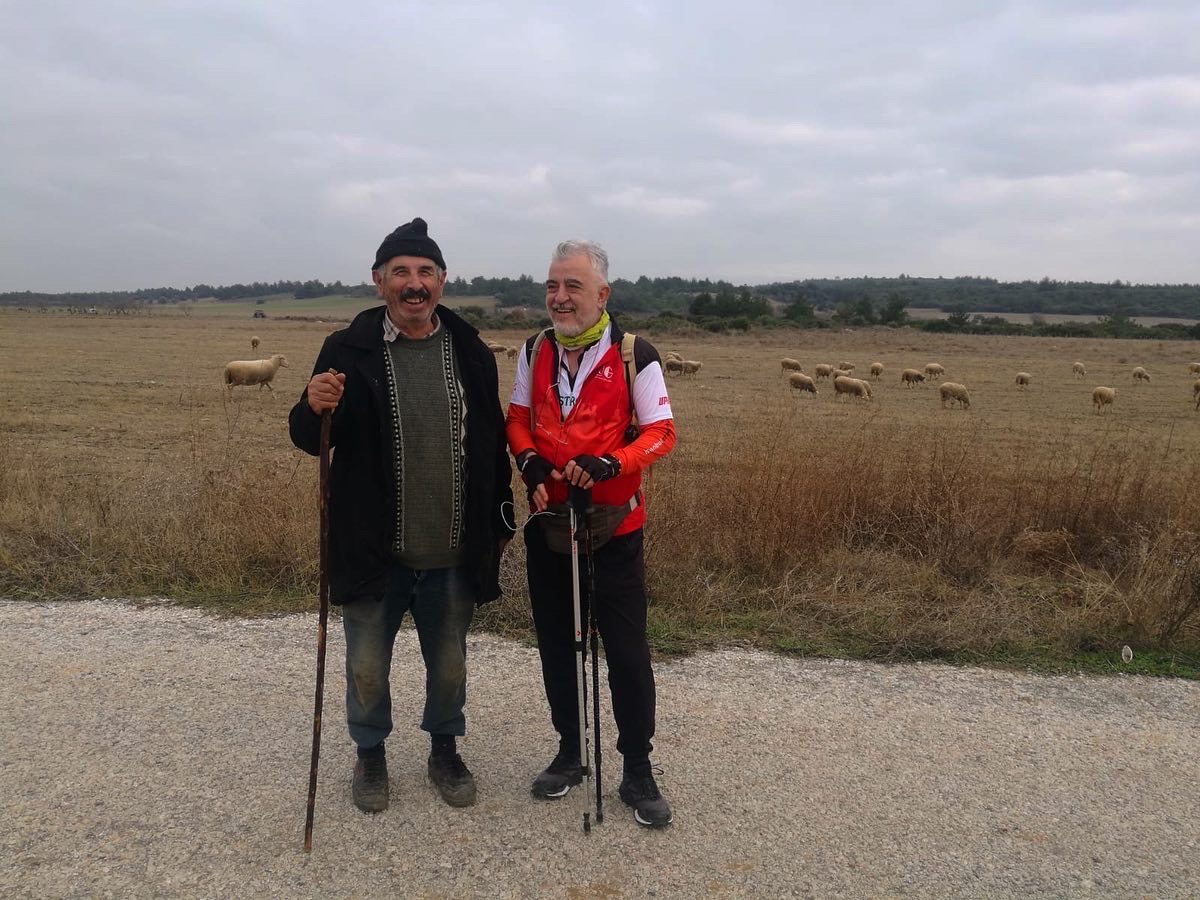
As I neared Alçıtepe, I came across a shepherd tending his flock on the slopes beside the road. His name was Kemal. Though outwardly just a shepherd, his manner, gaze, and words reminded me more of a philosopher of nature. On this solitary walk that embraced silence, meeting such a man—especially up here on the mountain—felt like a rare stroke of luck.
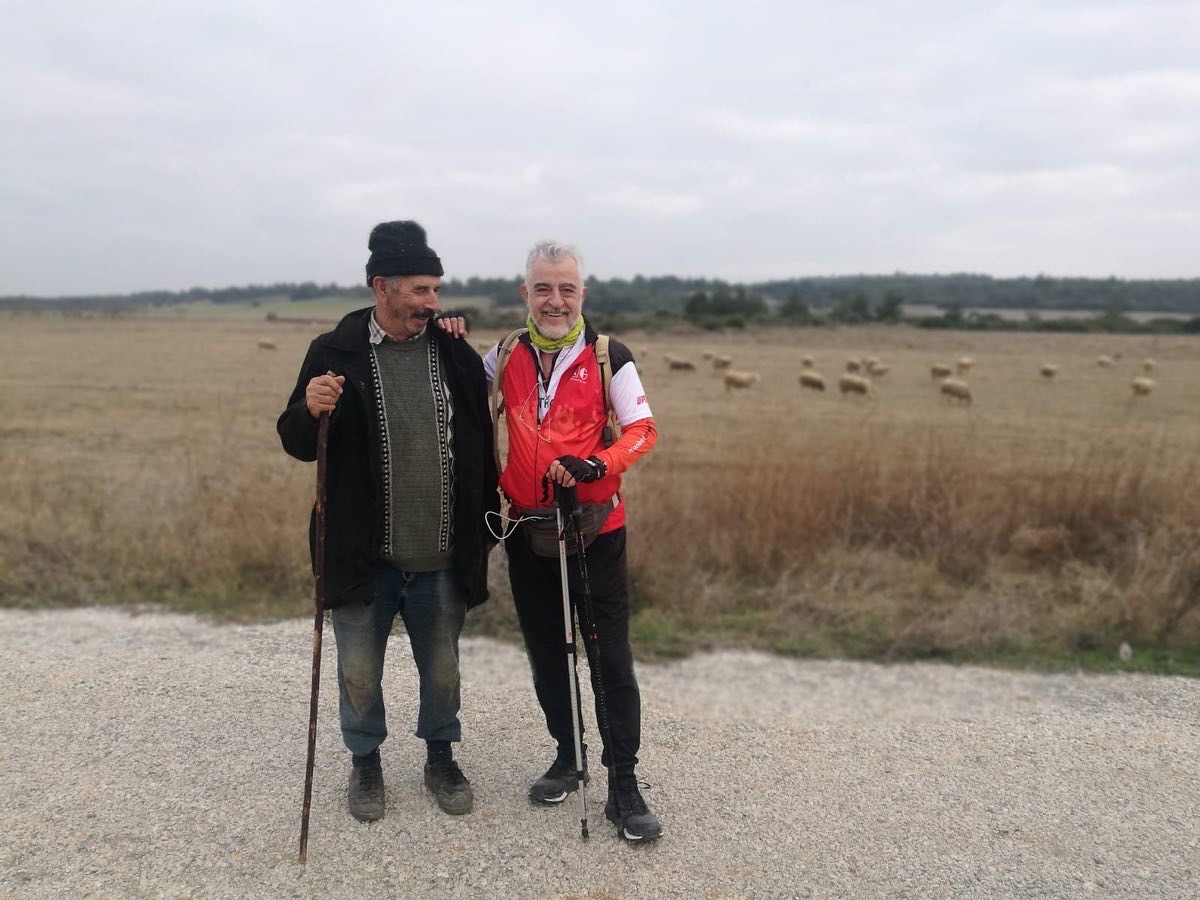
In bustling cities, people shy away even from eye contact, yet here, in the heart of nature, Kemal and I shared a warmth that bridged the human need for connection. When the flock’s dogs saw me as a stranger and began barking, Kemal waved from afar and approached with a genuine greeting. He gently kept the dogs at bay.
Our brief chat—around fifteen minutes—wiped away the weariness from the road. Holding in my palm the bullet and shrapnel fragments he found in the fields, remnants from the battles of Çanakkale, Kemal looked me in the eyes and said, “Your ancestors are proud of you for visiting them.” Those words tore down every wall inside me. My throat tightened, and my eyes welled up. In that moment, the journey found its deepest meaning.
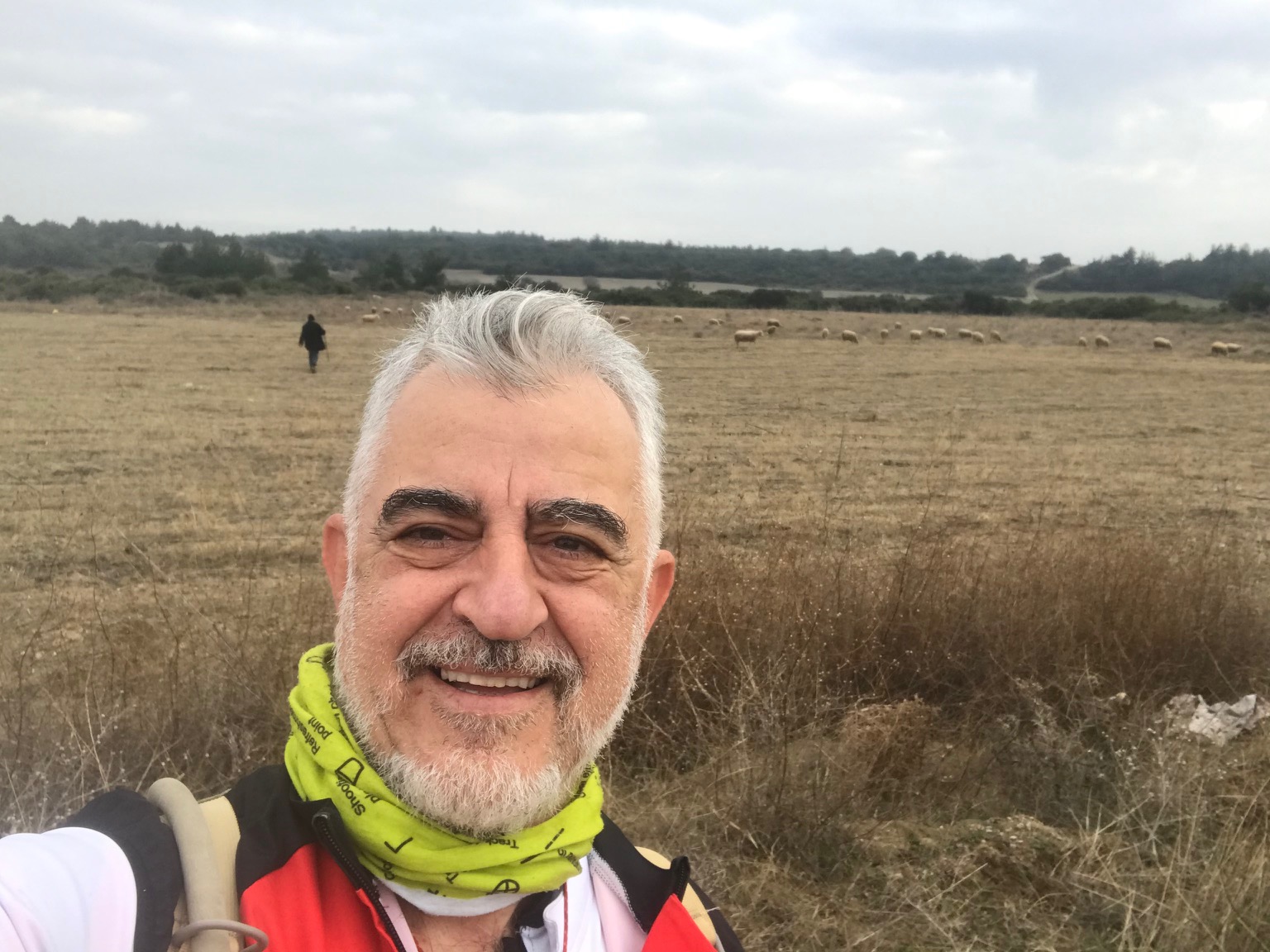
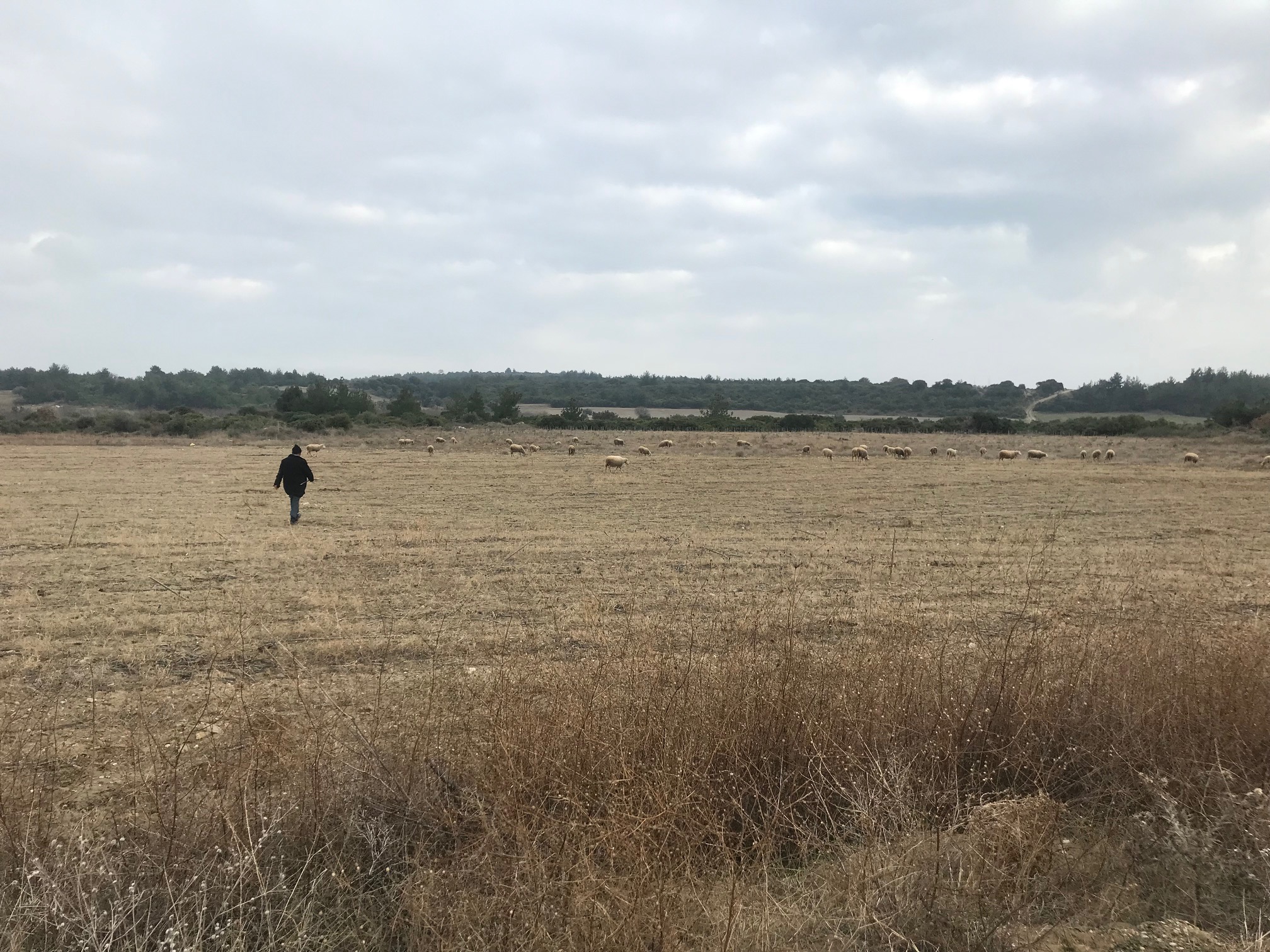
As I smiled at Kemal’s playful jests, he suddenly realised his flock had wandered into the olive saplings. His eyes snapped open; with concern, he hurriedly waved goodbye and ran off.
Only one sentence stayed with me:
“If only everyone in this country protected the olive saplings like you do. Instead, they uproot countless trees for mines and hotels…”
By about 4:30 pm, I reached Behramlı. The sun had yet to set. I had walked a full 28 kilometres today, leaving behind yet another of the fiercest fronts of the Çanakkale land battles. The ground beneath my feet seemed to speak to me; each step turned into a prayer, a silent salute.
We decided to spend the night again at Gürbüz Pension, where we stayed the previous evening. From Behramlı, we took the vehicle back to Alçıtepe. Tomorrow, on the final day of my trek, I would face the merciless winds of the Dardanelles and make my way toward Eceabat. The mission for the day was complete. I retreated into the humble room at Gürbüz Pension to rest my weary body.
 Walkerspirit