
Hospitality Surprises!

Walking Distance: 21,15 km.
Date of Walking: 16 December 2022
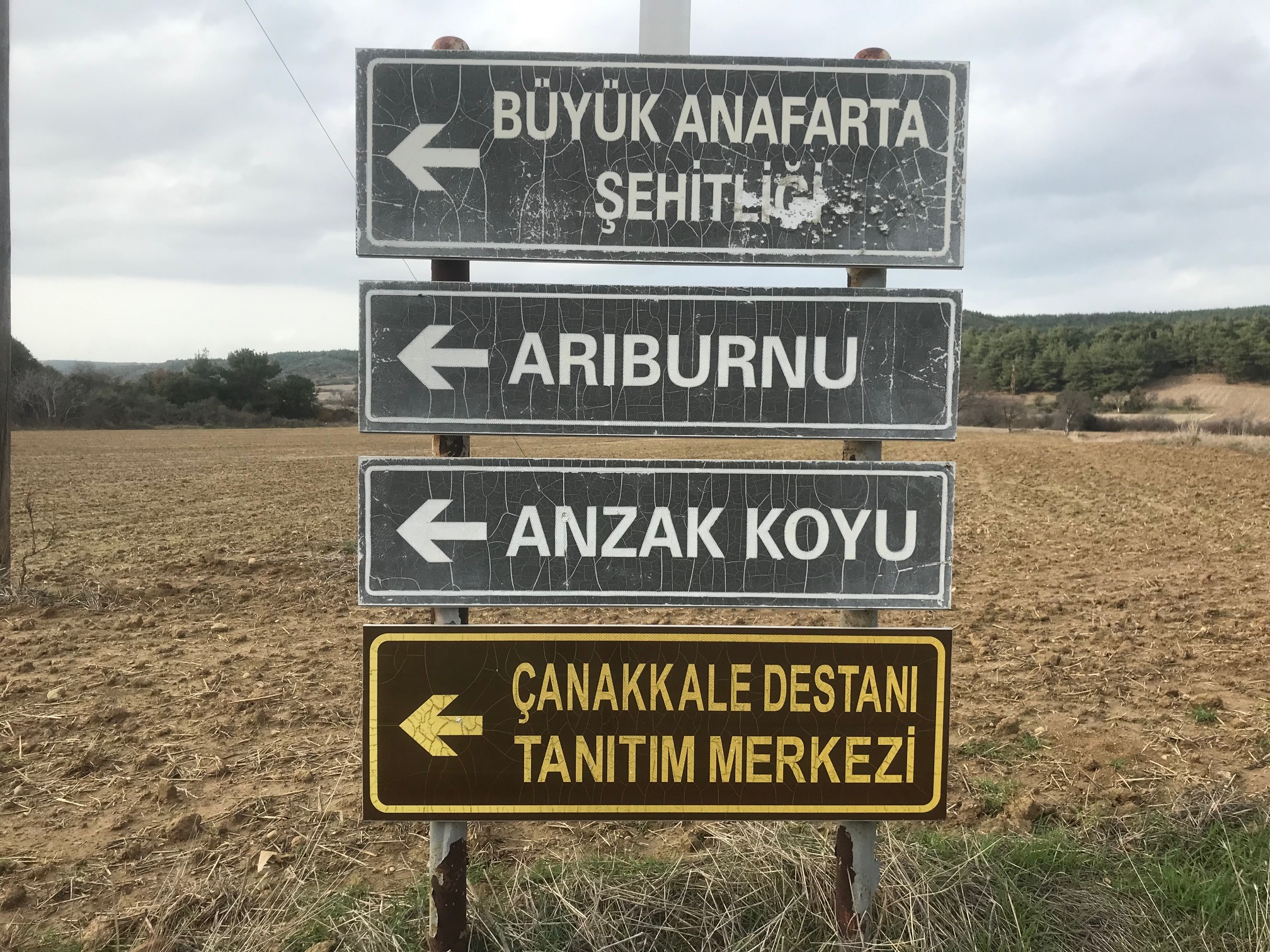
Walking Route: Tayfurköy-Karainbeyli-Yolağzı-Kumköy-Büyük Anafarta
We rose early on the third morning, well before sunrise. There’s something quietly magical about that hour — the soft hush before the world stirs, and the comforting ritual of sipping tea brewed over a crackling fire in the morning chill. For me, it’s one of the simplest, yet most rewarding pleasures of camping. I had just received the day’s weather update. The forecast was clear, with no disruptions expected — a small but satisfying reassurance when you’re on foot in a place so vast and exposed.
Breakfast was hearty and grounding: a rich omelette with eggs, potatoes and plenty of cheese, thick slices of village bread, fresh tomatoes bursting with flavour, and of course, steaming mugs of hot tea.
The route ahead would take me into Gallipoli National Park. While the path promised striking natural beauty and solemn history, it also posed a logistical challenge: wild camping was strictly prohibited. According to the regulations set by the Governorship of Çanakkale, camping is only permitted within designated areas inside the park. That meant Tayfurköy would likely be my final campsite on this journey through Gallipoli — a sobering thought, adding a quiet sense of finality to the morning’s peacefulness.
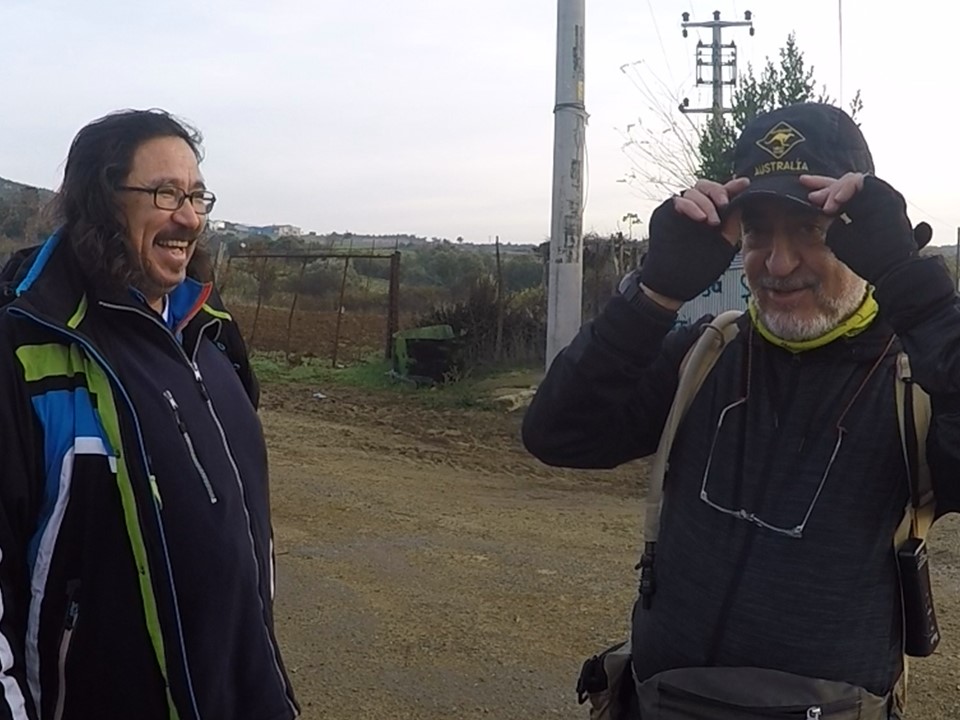
The day’s walk began exactly where I’d hopped into the car the afternoon before. There, at the familiar bend in the road, I paused to run through a final check of my gear — straps tightened, laces firm, hat low over my brow. Although today’s route was shorter than those of the previous days, I anticipated a different kind of challenge: the heat. The forecasted rise in temperature meant I would likely need to consume more water than before. That small detail altered the weight on my back — more litres to carry, more planning to stay hydrated under the unforgiving sun.
It came as no surprise that when we reached Karainbeyli village, we were greeted by the usual commotion — a pack of stray dogs barking their hearts out, announcing our arrival as if it were headline news. The village square was quiet otherwise, save for two old-style café houses standing side by side. I chose the one nearest the road and stepped inside. Setting my walking gear down on a table with a sigh, I ordered two cups of tea from the owner.
As I stretched out my legs, I became aware of a group of elderly men sitting just a few metres away. They were watching me with that curious, slightly suspicious gaze reserved for strangers passing through. I nodded to them in silence, a small gesture of respect. One of them — clearly the unofficial spokesman — eventually broke the ice. “Are you walking?” he asked, as if unveiling some great mystery. I couldn’t help but smile. Under different circumstances, I might have offered a playful reply, but I sensed it would be more fitting to keep it sincere. “Yes,” I said simply. “I’m walking.”
The old man chuckled and followed up with a classic: “Aren’t you tired?” That time, I couldn’t hold back my laughter. “Yes, I’m tired,” I replied with a grin. “I’m definitely tired.” He seemed satisfied with that, but not quite done. “Well then, why are you walking?” I just laughed again and let the steam of the tea cover my answer.
Moments later, Tamer arrived and parked the car in front of the other café across the square. As I nibbled on a small snack, I turned to the elderly men nearby and asked with a grin,
“Is there a bit of rivalry between the two cafés?” “There is,” replied the same old man who’d been gently teasing me moments earlier.
“The other one charges 3 lira for tea. This one still sells it for 2.5 But it’ll go up too — New Year’s Eve,” he added knowingly. “Then maybe you should start going to the other one,” I joked. “If that café raises their prices as well,” chimed in another old man, pointing towards the owner with a mischievous smile, “This bloke here won’t serve us tea at all anymore!” We all chuckled. The gentle banter gave the place a familiar, timeless air — like a scene that could have played out any day over the past fifty years.
Just then, I noticed Tamer at the other café, deep in conversation with a man who was now pointing in my direction. Tamer caught my eye and burst out laughing. Whatever was being said, it had piqued my curiosity.
I called over to the café owner. “Could I get the bill, please?” “Ten lira,” he said without hesitation. “Ten?” I asked, raising an eyebrow. “Tea is 2.5 lira, right? Two teas should be five.” With a sly smile tugging at his lips, he replied,
“You’re a stranger. A guest. I don’t know if you’ll ever come back to drink tea here again — so it’s five lira per cup for guests. That makes ten.”
He wasn’t being rude — just playfully cheeky in a way that only small villages can pull off without offence. Still, the contrast was striking. Just the night before, in Tayfurköy, we had experienced a level of hospitality so warm and generous that it lingered in my mind. Here, in Karainbeyli, I was being overcharged for tea — not out of greed, perhaps, but out of humour, or simply village pragmatism.
It reminded me how layered and unpredictable the notion of hospitality can be — even in a land where it’s almost sacred. Within a couple of minutes, I had my gear back on — though not without a tangle of mixed emotions. The strange behaviour of the locals lingered in my mind, leaving a vague discomfort. I gave Tamer a quick signal that I was ready to set off again. Then, almost on impulse, I turned back to the elders.
For a good thirty seconds, I simply looked at them — not in anger, but with a steady, searching gaze. A pause long enough to make them wonder what I might say. Instead, I placed a 20-lira note on the table, offered a wry smile and said,
“Thank you for your hospitality.”
Then I walked out of the café. Not long after, Tamer pulled up beside me in the car. We moved together — one on foot, one on wheels — along the dusty village road. My curiosity hadn’t faded. I asked him what the old man at the other café had said.
Tamer burst out laughing as he began recounting the conversation.
“He asked if you were my friend,” he said.
“I told him yes. Then he wanted to know what you were doing, walking through all this land.” “I explained your journey — from Gallipoli to Eceabat.” He paused, chuckling again. “And then, he added, “he asked me something unexpected… He said,”
“Does your friend have a serious problem?”
The road stretched on toward Kumköy, winding gently through a landscape of rolling hills and scattered fields. The terrain was quiet, even pleasant — but for reasons I couldn’t quite put my finger on, nothing in this stretch stirred my interest. It felt emotionally flat, a place that passed by without leaving a mark.
What did catch my eye were a few villa-style houses rising behind high walls — oddly out of place in the humble rhythm of village life. Built on expansive plots of land, these structures had the cold, calculated geometry of city architecture. They didn’t belong here — and yet, here they were. It was clear that Istanbul’s reach had extended this far too, carving out its own version of comfort in places that once held a different character.
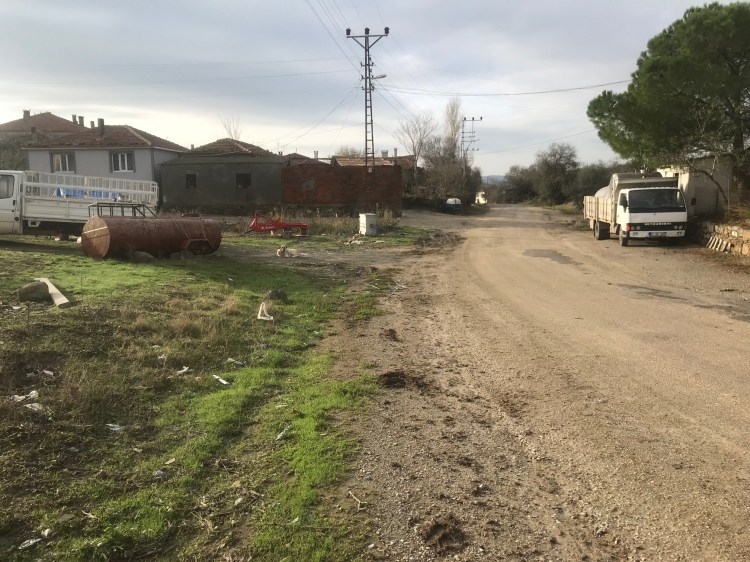
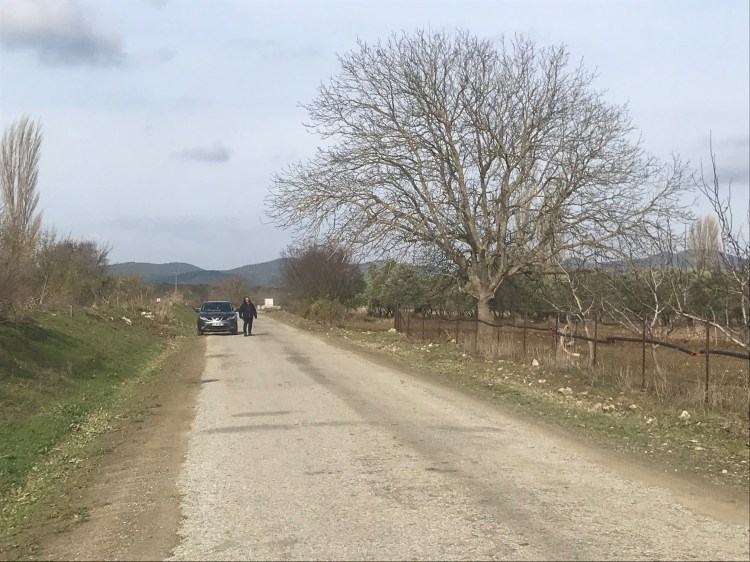
As I neared Kumköy, I decided to call a friend — someone I’d informed about my journey before setting off. Alen Gavar, a teammate from the Istanbul Orienteering Group, had moved to this region about a year ago to work on a private farm. We hadn’t seen each other since a full year.
Now, with the kilometres behind me and Kumköy on the horizon, a reunion was finally within reach.


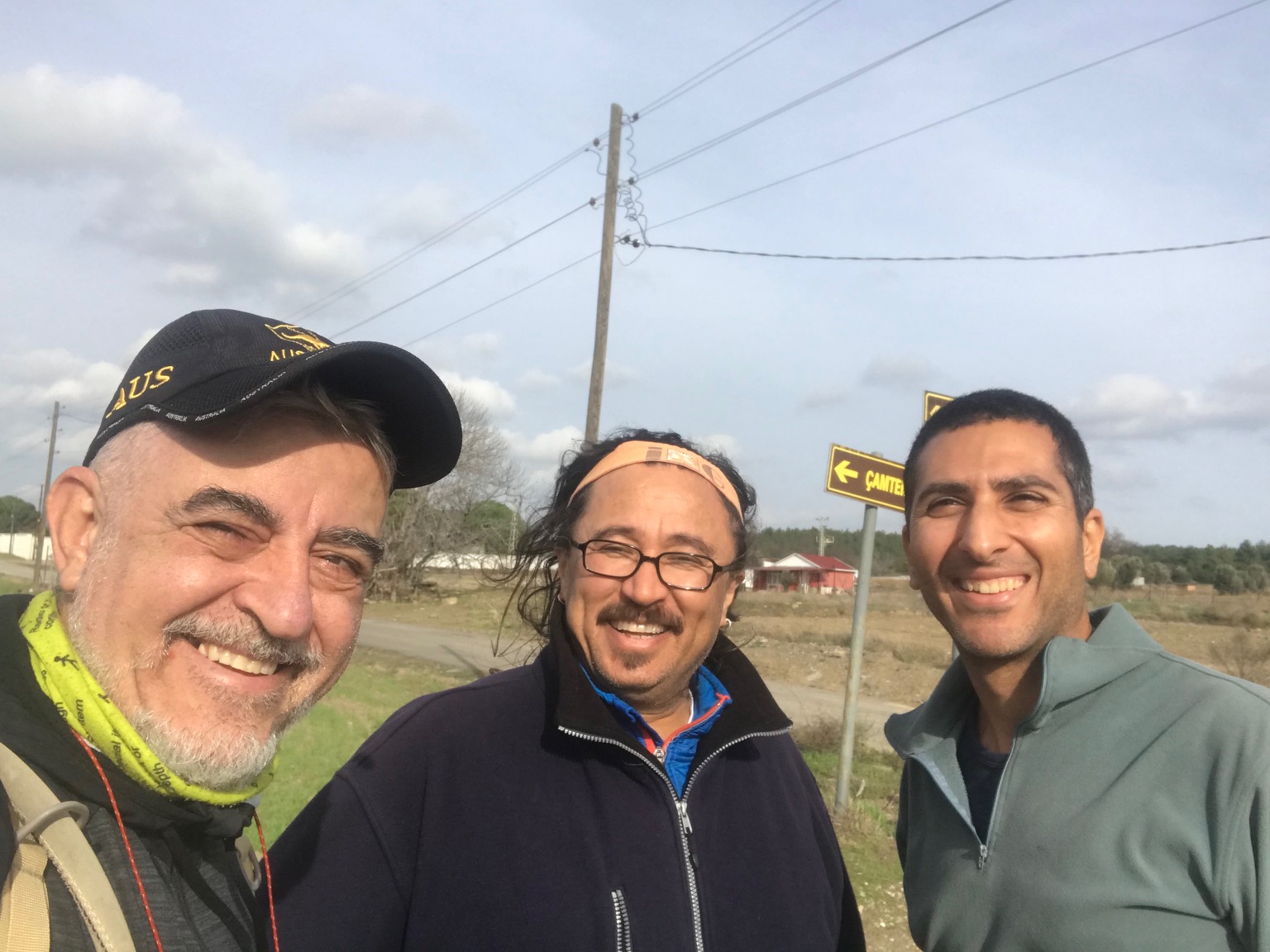
By sheer luck, we ran into Alen right at the junction between Kumköy and Büyükanafarta village. It was one of those rare, serendipitous meetings — the kind that feel both unexpected and deeply welcome, especially when each of you is caught up in entirely different pursuits. Despite his busy schedule, Alen generously carved out a few minutes for us. Those moments were enough to lift our spirits. We discussed potential camping spots around the area, and he offered a few helpful suggestions. I could see he was pressed for time — he needed to head to Eceabat to pick up supplies for the farm where he now worked — and I didn’t want to keep him any longer. “If you can’t find a place to camp, just let me know,” he said as we shook hands. Then, with warm hearts and light steps, we set off in opposite directions — he toward the coast, and we toward the final five kilometres of the day’s walk.
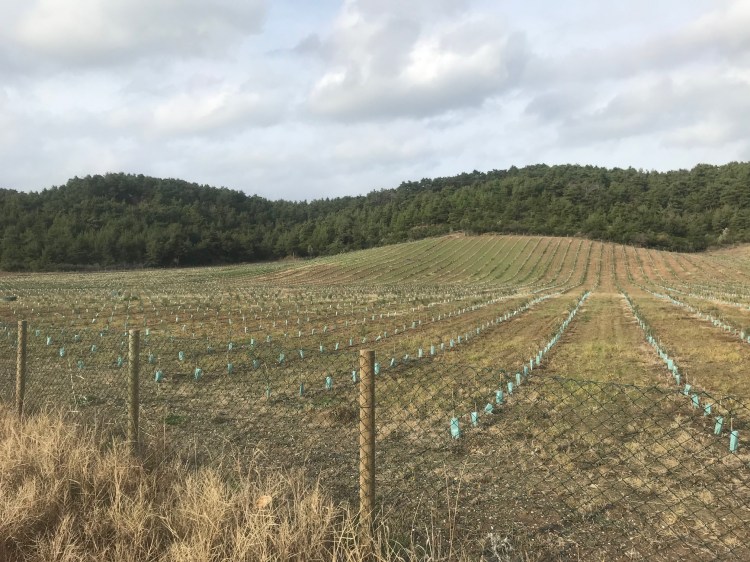
I was about five kilometres from Büyükanafarta village. The road meandered past vineyards, and I tried to draw pleasure from admiring the rows of newly planted vine seedlings — fresh green growth full of promise. But watching wasn’t quite enough. I found myself wanting something more tangible, something to break the rhythm of the walk.
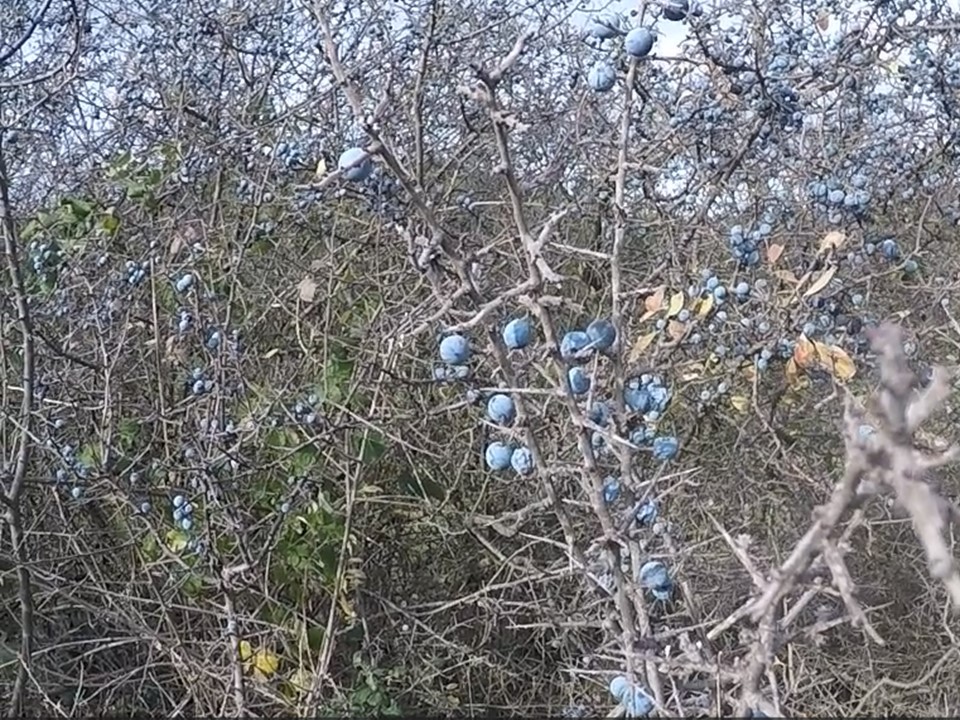
About a kilometre and a half past the Kumköy junction, Tamer pulled up alongside me and pointed toward a cluster of blueberry trees growing near the riverbank. They stood in a kind of no man’s land — not fenced, not claimed — which meant we were free to help ourselves.
For the next half hour, we did just that. We picked and ate handfuls of the sweet, sun-warmed fruit, their flavour sharpening the senses after hours of walking. The moment felt simple and generous. We filled a plastic bag with what remained — a gift from the land, saved for the evening ahead.
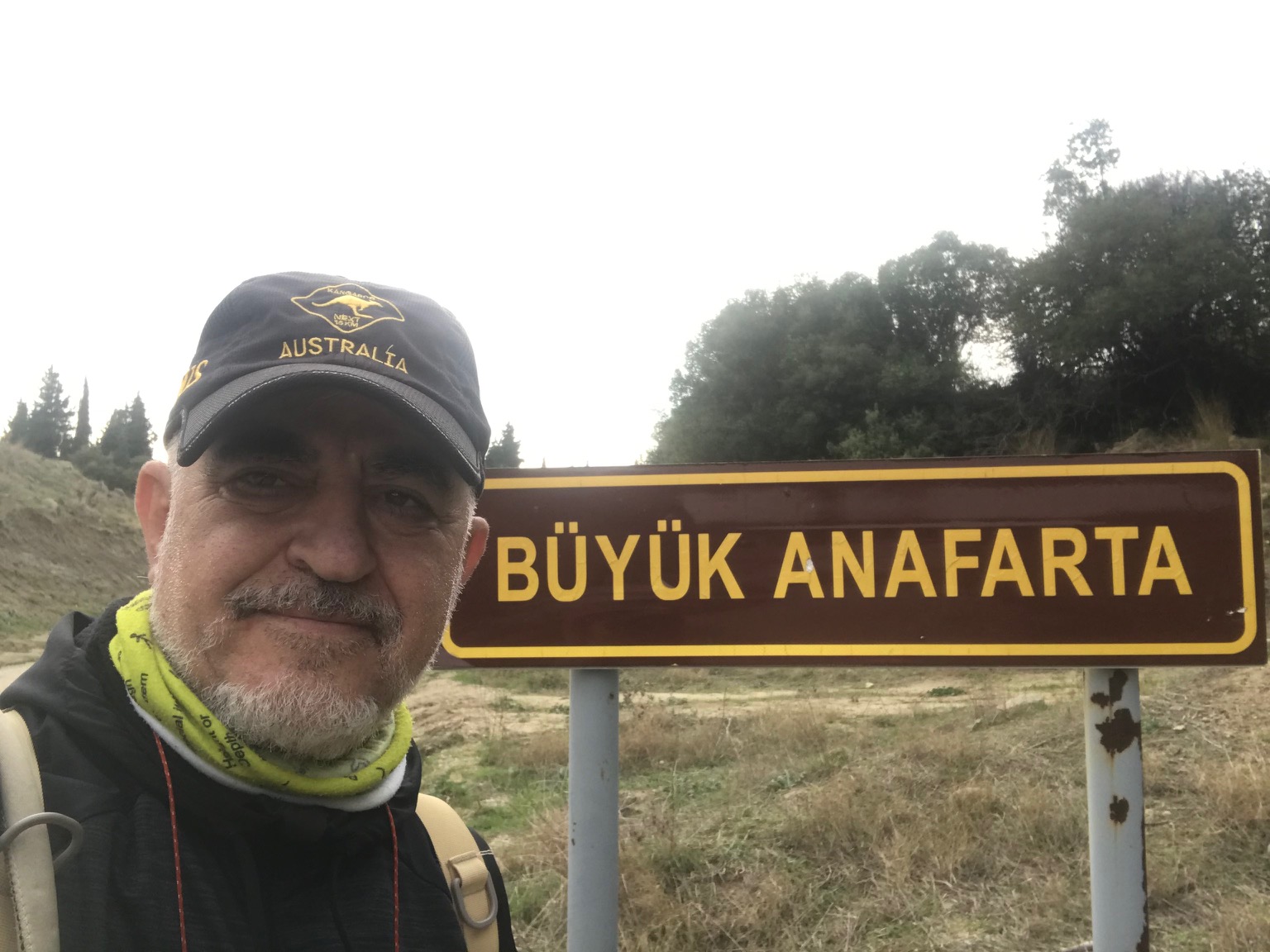
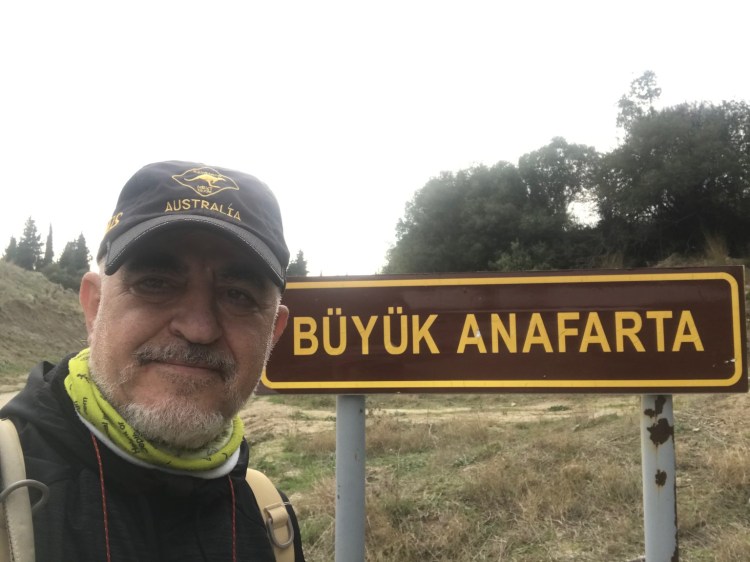
When we finally arrived at the Büyükanafarta village square, I was overcome with a quiet joy. The third day had ended without mishap, without injury — and now, I stood at the heart of a place etched deeply into history.
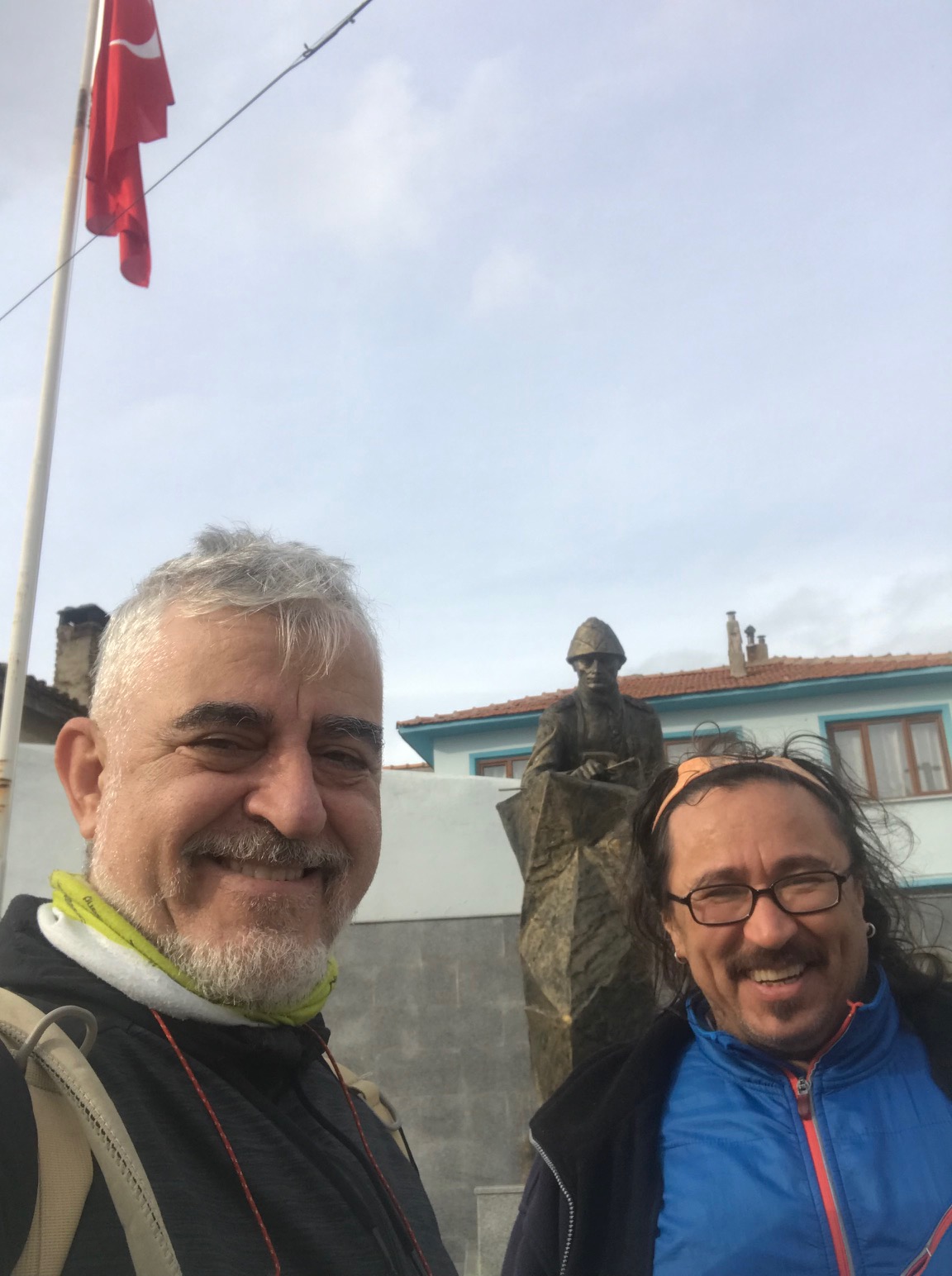
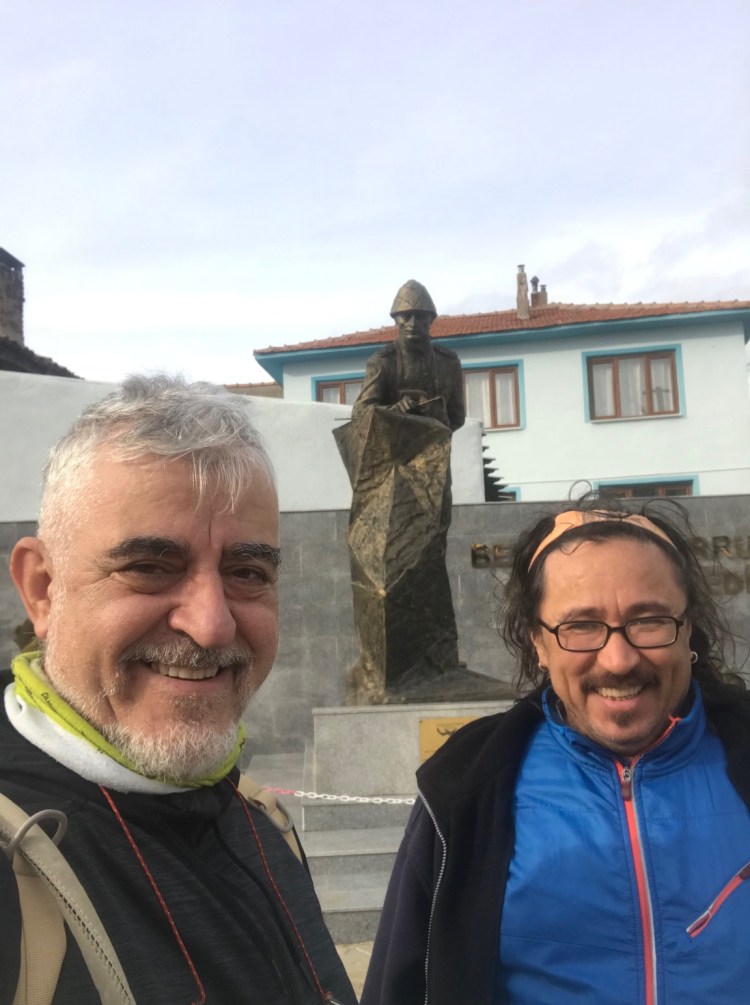
Tamer and I posed for a photo in front of the Atatürk statue, standing tall at the centre of the square. There was pride in our smiles — not just for the distance we’d covered, but for having reached a place that bore the weight of memory. As the camera clicked, I noticed a group of five cyclists watching us from the porch of the nearby café, sipping tea in the afternoon shade. Clearly, this village had become a frequent stop for endurance-minded travellers like us. After the photos, I changed out of my sweat-soaked walking clothes and headed straight for the café with one thing in mind: a warm toast loaded with double cheddar cheese and a large glass of sugary tea.
As we passed the cyclists, we exchanged greetings and shared a light-hearted moment. When they found out I’d walked the route they had pedalled, they burst into laughter — as did we. It was the kind of camaraderie only the road can create. Still, I knew the truth: pedalling such a long distance carries its own kind of hardship. And today, whether by foot or by bike, we had all earned our tea.
The café owner turned out to be exceptionally polite and hospitable — a refreshing contrast to the uneasy moments we’d had earlier in the day. For some reason, the first thing I asked was the price of tea.
“Two and a half lira,” he said, with a smile.
A guaranteed price — and a small relief.
I ordered two large cups of tea and two generously made cheddar toasts for myself. Tamer, less greedy than I, went for a single toast and one cup of tea. When I asked whether there was a guesthouse or any place we might stay for the night, the café owner gave us the name of someone who owned a small smithy at the edge of the village. “If he’s around,” he said, “he’ll help you out for sure.” But he didn’t hesitate to give a word of caution. “Whatever you do,” he added, “don’t camp inside the boundaries of the national park. I don’t want you to run into trouble with the gendarmerie.”
Although I felt confident that, as a retired officer, I wouldn’t face much difficulty with my former comrades, his words lingered. He was right. Rules are rules — and the idea of putting someone else in an awkward position over a simple night’s sleep didn’t sit well with me. I began to think it might be wiser to look for an alternative — something more certain, more proper — than setting up a tent in forbidden land.
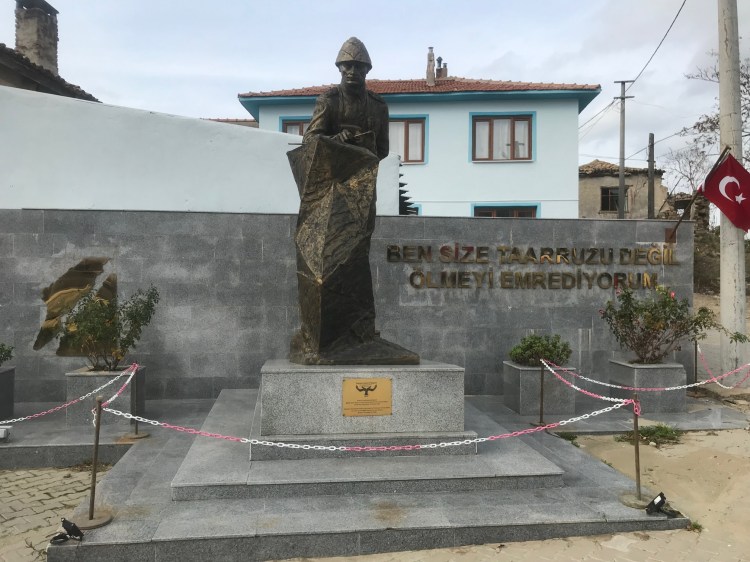
As I had feared, we couldn’t find the blacksmith. So I turned to Tamer and suggested we drive back to Kumköy and get in touch with Alen. If that didn’t work out, we’d fall back on a last resort: spending the night in the village mosque. And truth be told, I found that idea strangely comforting — the thought of spending the night in quiet prayer felt almost like a blessing. After finishing our tea and bidding farewell to the kind-hearted café owner and our new cyclist friends, we were just about to leave the village when my eyes caught the inscription on the left side of the Atatürk statue — a sentence etched into the heart of the nation:
“I am not ordering you to assault, I am ordering you to die.”
That was how my ancestors had defended this land — without hesitation, without question.
The drive back to Kumköy took just ten minutes — a road we had covered in 75 minutes on foot. It felt strange to return so quickly. The village, once again, unfolded before us with its own peculiar charm. On one side stood a handful of modern structures; on the other, makeshift two-storey homes — crooked, patched together, but full of life. The contrast was sharp, yet somehow fitting. What brought me genuine joy, however, was far more humble: the discovery of a clean, modern public toilet in the village square.
It may seem like a minor detail, but if you — like me — ever set your heart on long-distance walking, let me offer one hard-earned piece of advice: the greatest logistical challenge you’ll face is the simple need for a toilet.
It’s a problem that arises several times a day, yet is rarely addressed with proper foresight. While it’s nearly impossible to plan each stop, knowing in advance which settlements offer this most basic necessity can make all the difference between a pleasant journey and an uncomfortable one.
When we arrived back at the café in Kumköy, we noticed something different from the other villages we had passed through — there were more young people here. They sat in small groups, talking among themselves, giving the square a livelier air than we’d grown used to.
The café owner was a tall, broad-shouldered man in his mid-forties, with a light forehead, a clean-shaven face, and a bright, cheerful demeanour. Before we even had a chance to place our order, two steaming glasses of tea were already on our table. His casual humour was just as generous as his service. Each time he passed by our table near the door, he tossed out a joke or a witty remark, making us laugh despite our tired limbs.
As I recharged our batteries, I also began noting down the day’s memories. A strange sense of calm had settled over me. I didn’t even feel like searching for a campsite. In my mind, I had already accepted that I’d be spending the night in the village mosque. But fate had other plans.
Just then, Alen returned from Eceabat and walked into the café.
With a grin, he announced:
“My friends, get ready — we’re going to the farm.”
We offered the usual half-hearted protest,
“Oh, we wouldn’t want to bother anyone,”
—but Alen wasn’t taking no for an answer. Calm and persuasive, as always. So, our short chapter in the Kumköy café came to an end. We packed our things quickly and got into the car. By now, night had fully fallen. Following Alen along a narrow dirt road, our headlights lit up the wire fences lining either side of the track. Some of the fencing was covered in creeping ivy, creating the eerie illusion of driving through a tunnel of green and shadow.
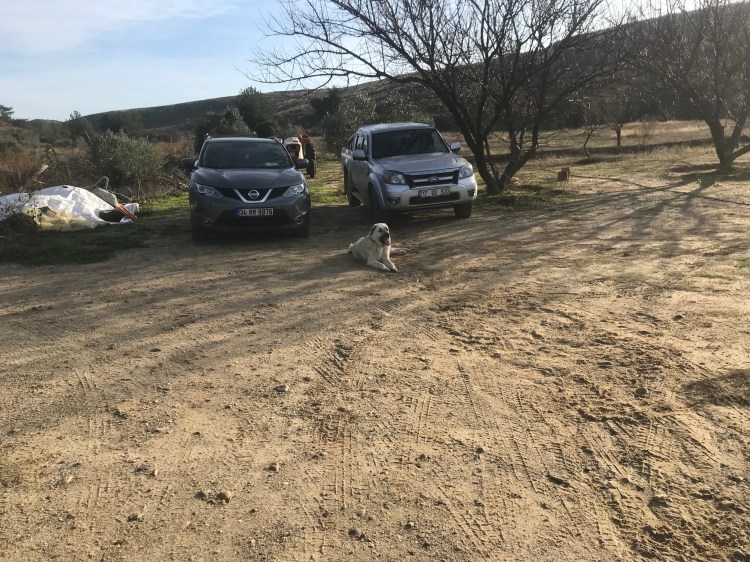
After just a few minutes, we reached the farm’s entrance: a large wooden gate made from thick rows of tree trunks, opening inward. As we passed through, we were greeted by two massive Kangal dogs. Thick collars with iron barbs encircled their necks — a stark reminder that these animals didn’t just guard property, but had to defend themselves against the wild. The presence of such collars meant one thing: predators still roamed these lands — wolves, most likely.
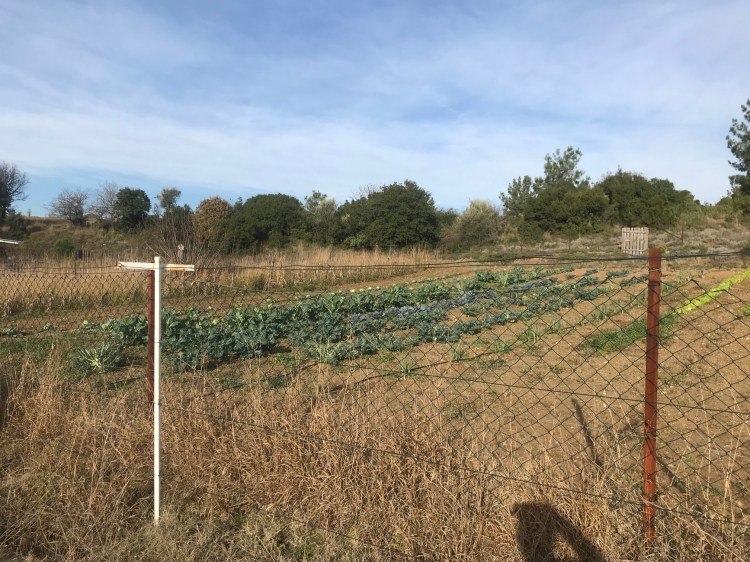
As our headlights swept across the farm, several small bungalow-style huts came into view, their silhouettes calm under the night sky. About fifteen metres away, a soft glow spilled from the windows of a two-storey building. That’s where we headed. We stepped out of the cars, the Kangals watching silently, their breath steaming in the cool air. As we approached the building, we passed under a covered porch sheltering long wooden tables. Spread out across them were freshly picked vegetables, wild herbs, and bottles of golden olive oil — some resting on the tables, others neatly lined up along the wall.
It was a scene that spoke of self-sufficiency, of life lived close to the earth. And in that moment, I knew: this was the right place to end the day.
At the entrance to the building, we were warmly greeted by a tall young woman in her thirties — about 1.85 metres, with short-cropped black hair and a confident air.
“Hello, welcome. I’m Merve,” she said, extending her hand with a bright smile. From the very first moment, her energy was radiant — infectious, even.
As we stepped onto the porch, two middle-aged women also greeted us with cheerful hellos. The floor was lined with jars of pickles and bottles of olive oil. At the table, the women were sorting and slicing an impressive variety of fresh vegetables. The whole scene had the warm, familiar air of a family kitchen.
We were invited inside, where we moved instinctively towards the source of the glowing light. It was a large room with a wooden mezzanine above. At the centre stood a long table, surrounded by two sofas and a few chairs. Two men — one around my age and the other perhaps in his sixties — stood up as we entered. They greeted us with genuine warmth, shaking our hands firmly before inviting us to sit down at the table.
It was clear they had been waiting for us. The table was perfectly laid, with freshly prepared salads and colourful vegetable dishes. Everything was untouched, perfectly arranged — a kind of quiet ceremony in our honour. I had to restrain myself from immediately tearing into the steaming village bread, its scent teasing my senses. But the most delightful surprise sat right in front of me: a bowl of tarhana soup, thick and fragrant, still releasing soft tendrils of steam. One of my absolute favourites.
Honestly, I wished I could’ve written down every single moment we spent at Lacivert Village Farm, every exchange and every burst of laughter. The place was brimming with positive energy — the kind that seeps into your soul and sustains you for days. It had been a long time since I’d taken part in such a heartfelt, genuine group conversation. Strangely enough, although I knew no one on the farm besides Alen, it felt as if we’d all been friends for years.
We sat and chatted with Mr Turgay and his lovely wife for quite some time. The other couple excused themselves and went to rest after dinner. As for me, my aching back and legs reminded me it was time to lie down as well. After thanking our hosts, Alen guided us out of the dining hall. We followed him towards a cluster of huts about 100 metres from where we’d parked the car. It was pitch black — no moonlight, no streetlamps — and we had to stay close to Alen’s flashlight to see the path. Just behind me, I noticed two large shadows moving quietly. The Kangals. Still guarding, still watching.
Our hut for the night was a compact 20-square-metre structure made of wood and duralite. Inside, it was simply furnished — two single beds facing one another, a small electric heater humming softly in the corner. Just 15 metres away was a reinforced concrete building housing the toilet and bathroom. It may not sound like much, but out here, this was luxury. Pure, serene, grounding luxury.
Returning to the car to fetch my belongings in the pitch black wasn’t exactly ideal, but I was strangely comforted by the silent escort of those two guardian shadows. Within twenty minutes, I was already tucked in, warm and at peace, slowly drifting off to sleep in that quiet, heated hut. Once again, the silence of the land embraced us — deep, wide, and perfect for rest.
 Walkerspirit