
In to the Neck of the Bottle
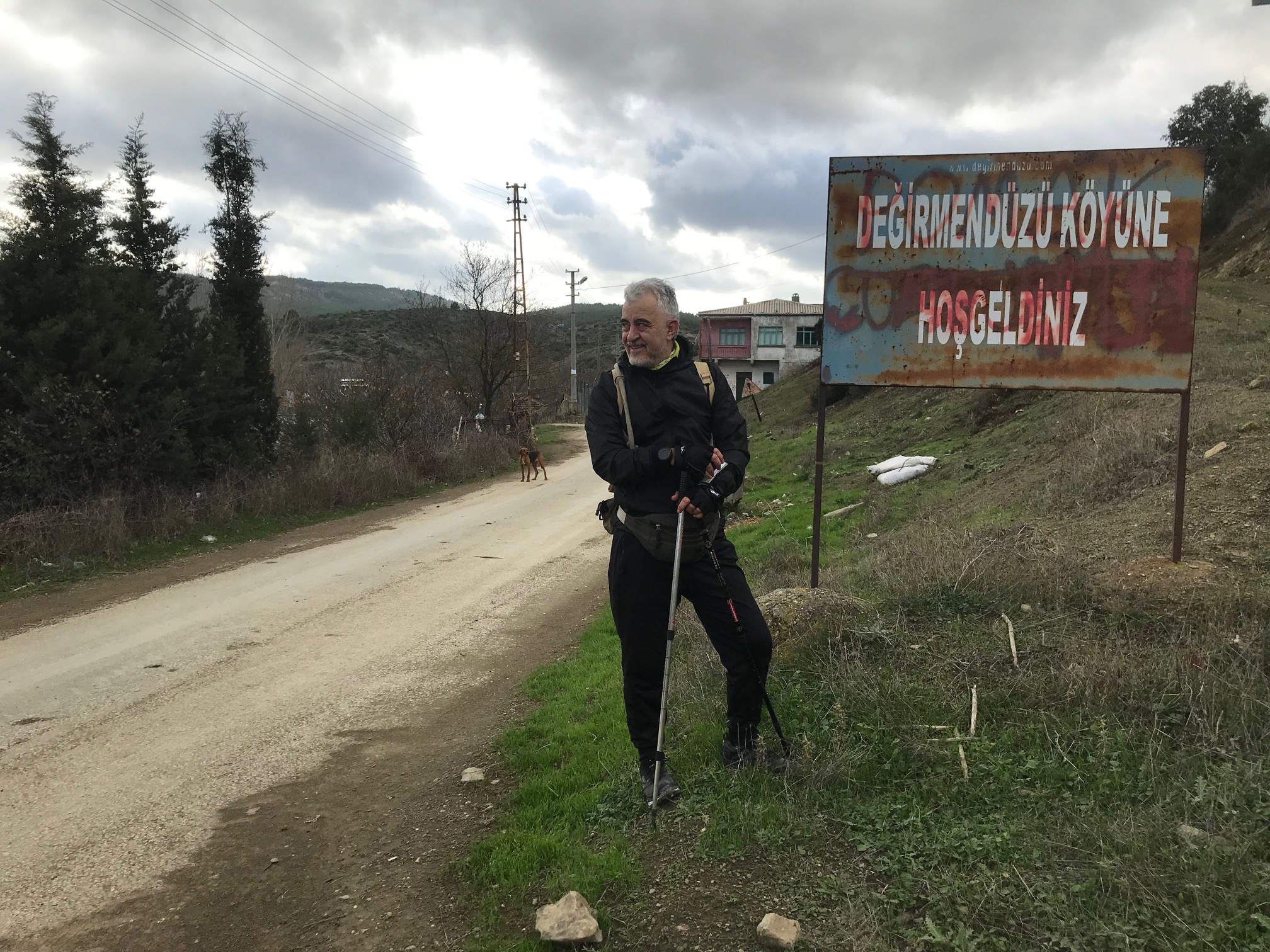
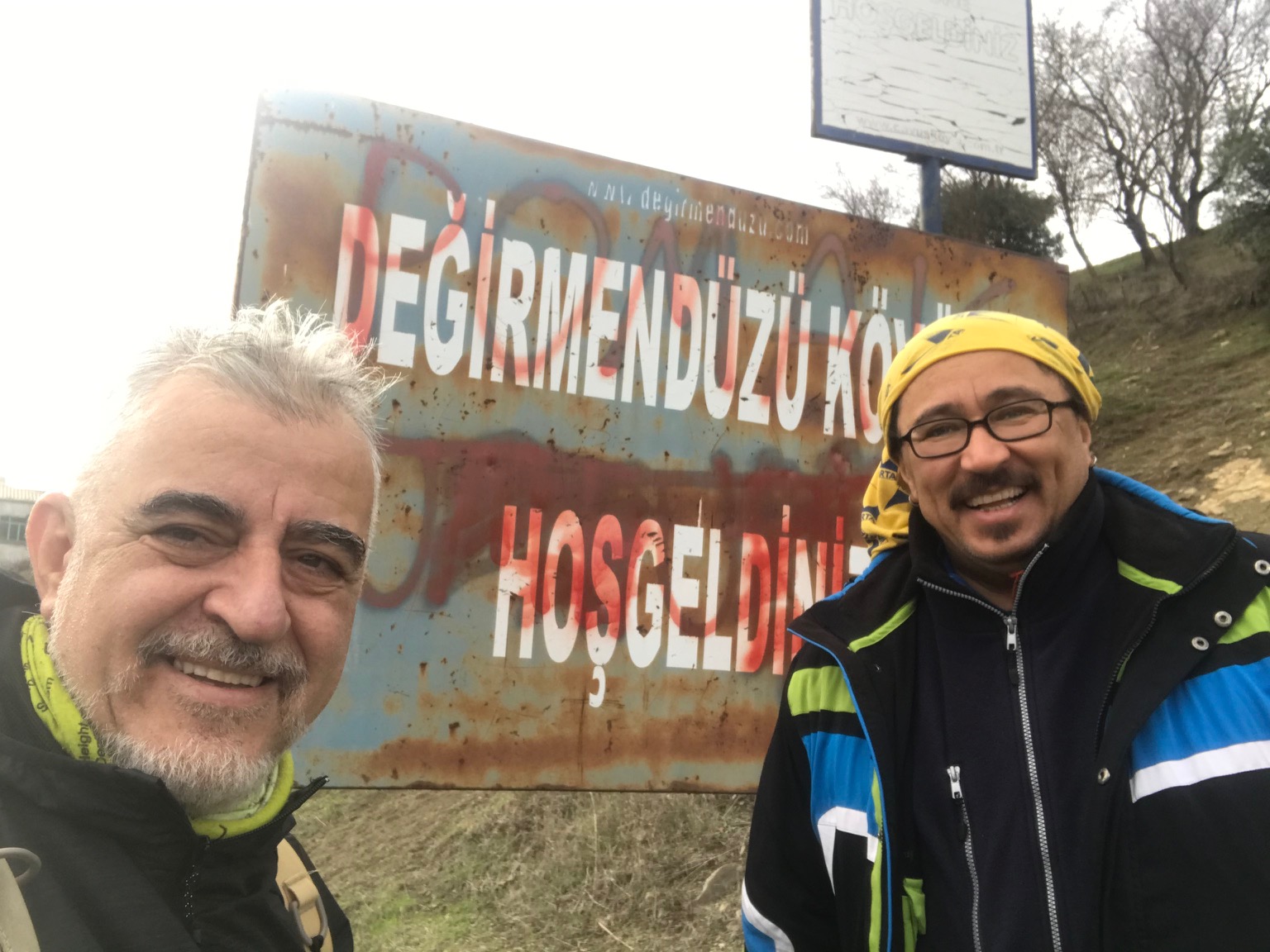
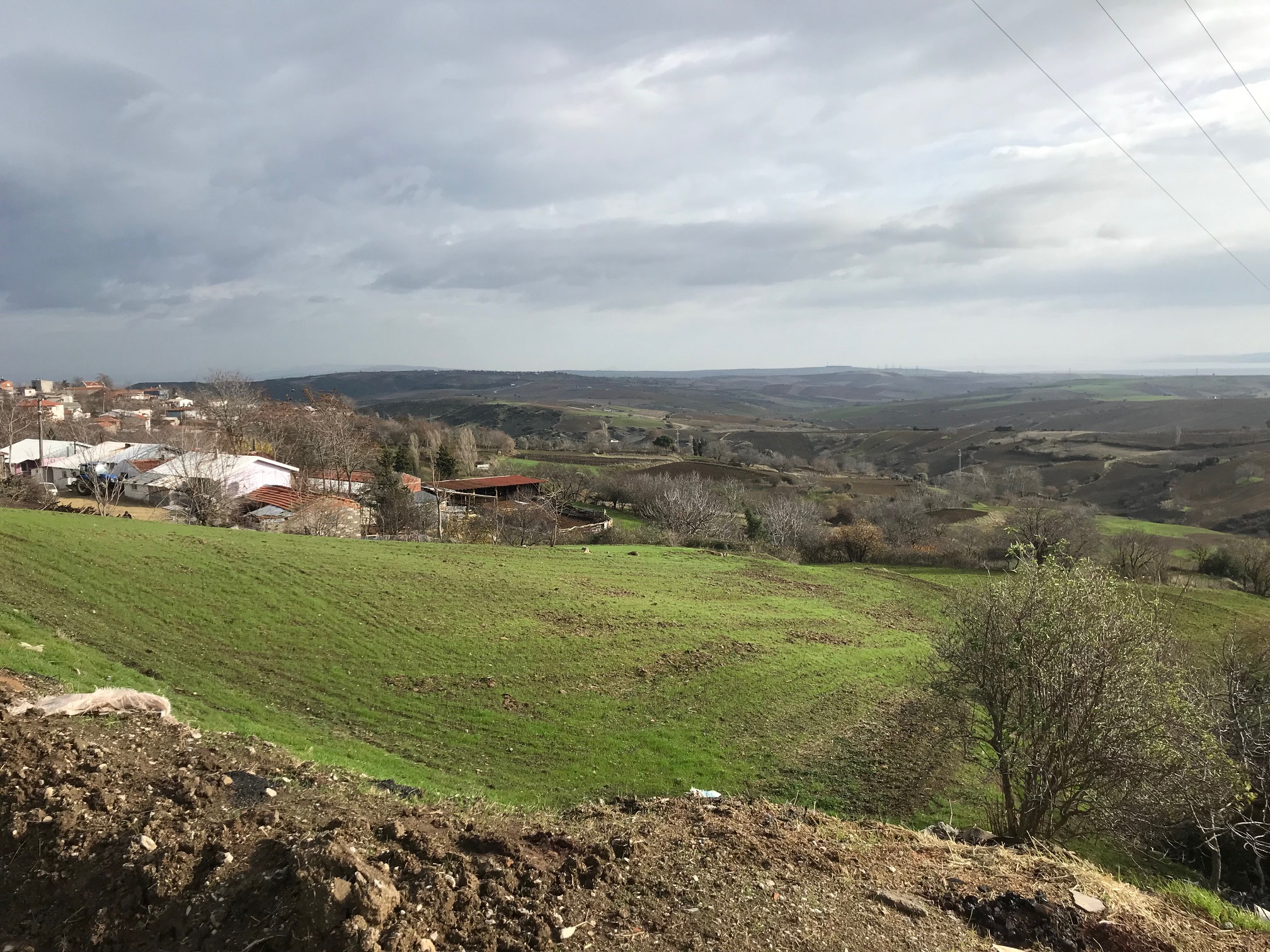
Walking Distance: 25,52 km.
Walk Date: 15 December 2022
Walking Route: Güneyli-Ocaklı-Yeniköy-Fındıklı-Değirmendüzü-Tayfur Köy
The second day began with a peculiar sense of anticipation. What made today significant was that I would finally be stepping onto the peninsula itself—a narrow stretch of land often likened to the neck of a bottle due to its distinctive geography.
During the Gallipoli campaign, as thousands of soldiers made their way towards the front lines, they passed through this very narrowing of land. The villagers—mothers, daughters, and wives—watched in silent dread, lamenting the soldiers’ fate with a haunting saying: “Those who enter the bottle never return.”
Today, I was walking that same path—into that symbolic bottleneck—retracing the footsteps of history. As I was leaving Güneyli village, I was given a firm yet familiar send-off by six shepherd dogs guarding the sheep pens at the village’s edge. Was I surprised? Not in the slightest. Farewells on this journey had taken many forms, and this one felt more like an agility test. Not wanting to trigger my acoustic deterrent device, I opted instead to hop into the car and drive the first 300 metres out of the village. Then, on the quiet edge of the road, I stepped out, tightened my backpack straps, and began my 24-kilometre journey—one that would stretch across the next seven hours and deeper into the heart of the peninsula.
A Quiet Encounter on the Open Road
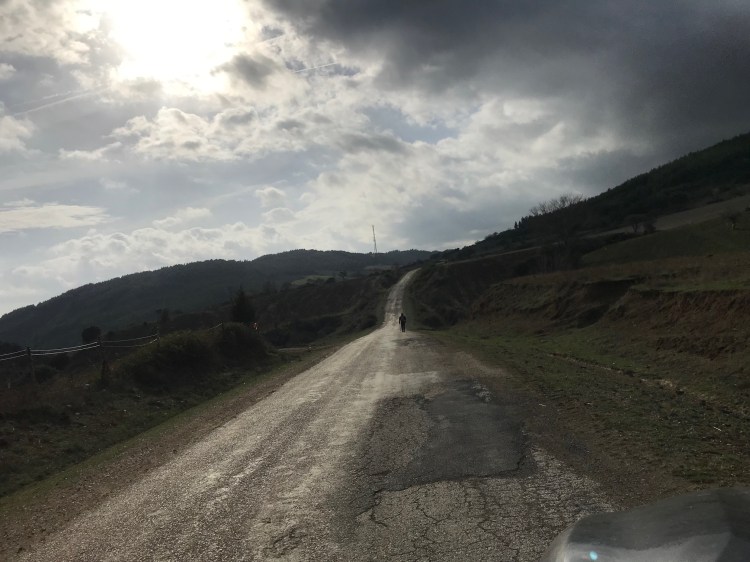
It was still early morning, and the narrow road stretching from Güneyli to Ocaklı lay utterly still beneath my feet. There wasn’t a single passing car. The silence was so complete, I could hear each footstep echo softly against the bitumen.
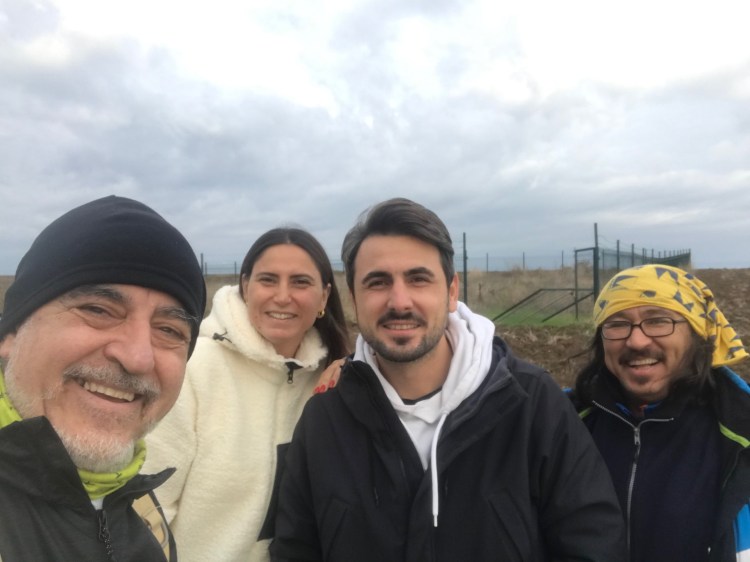
This calm was soon interrupted by the distant hum of an approaching engine. I turned my head as a vehicle with Istanbul plates slowly passed me, then pulled up a few hundred metres ahead. A man and a woman stepped out and began surveying the nearby fields, casting the occasional glance toward the lone figure—me—walking steadily behind.
It took me six or seven minutes to catch up with them. As I drew near, they paused their conversation and greeted me with warm smiles, which I returned in kind. Our casual chat revealed that they had driven all the way from Istanbul in search of land to build a home in this serene corner of the world.
Of course, their curiosity about my walk got the better of them, and they asked several questions. We exchanged stories—and soon, Instagram accounts. As we said goodbye, we left each other with an unexpected sense of connection, the kind that only the open road and chance encounters can create.
A Morning Scene from Another Time
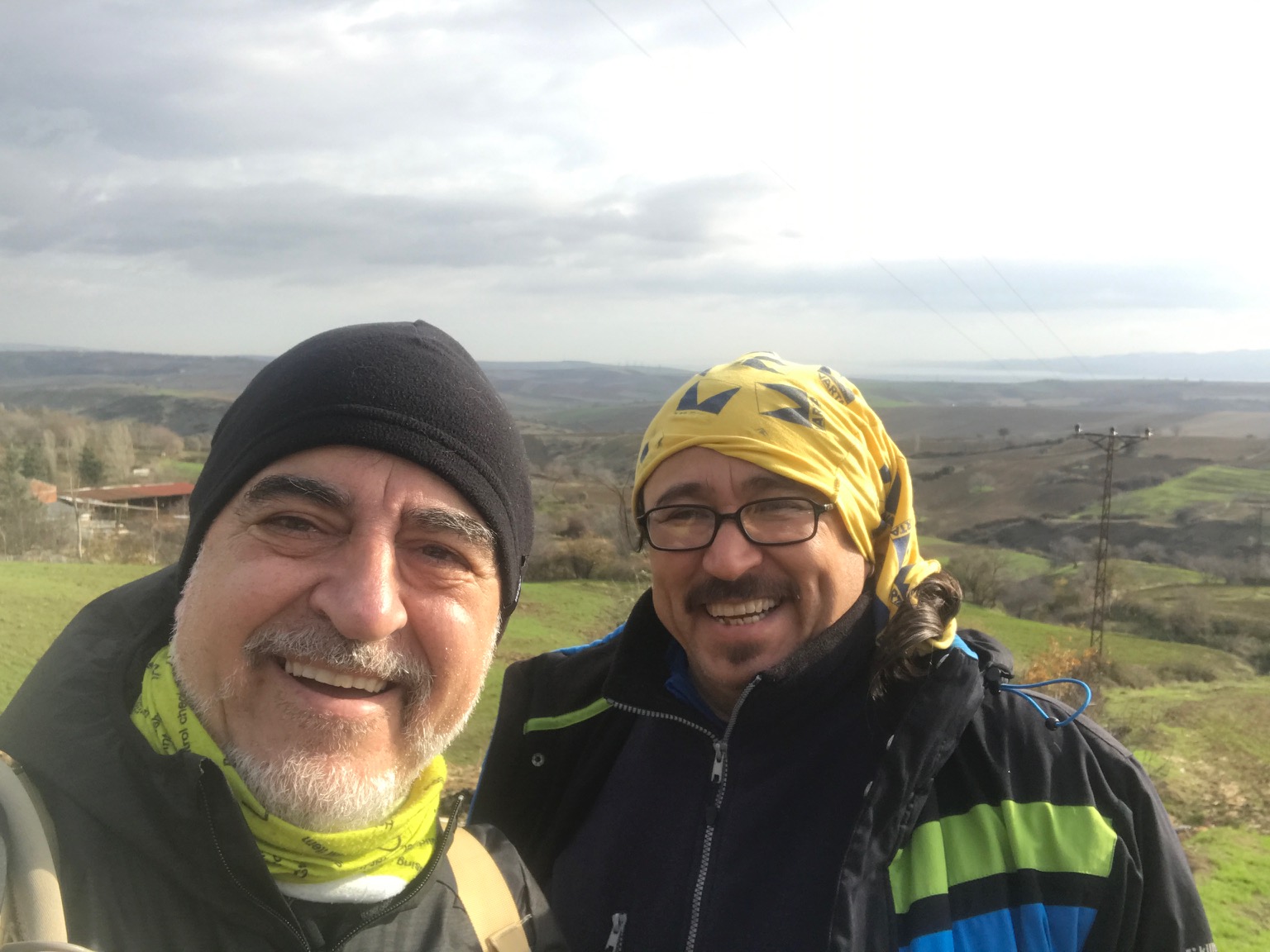
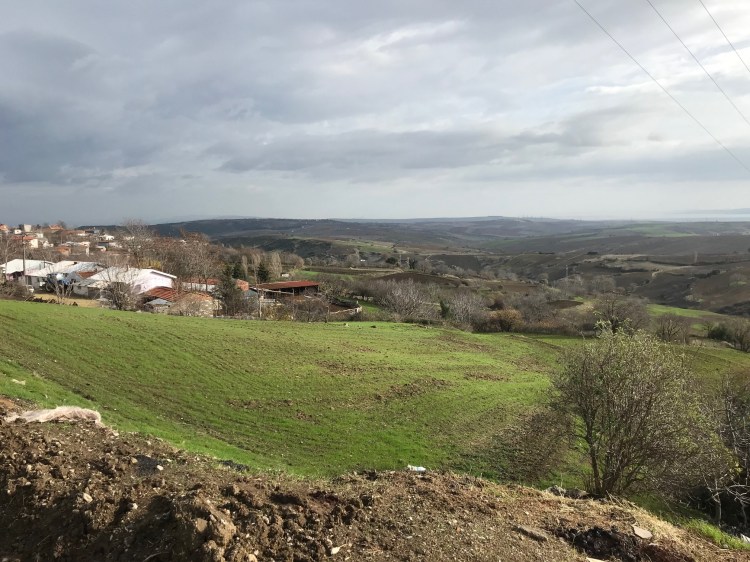
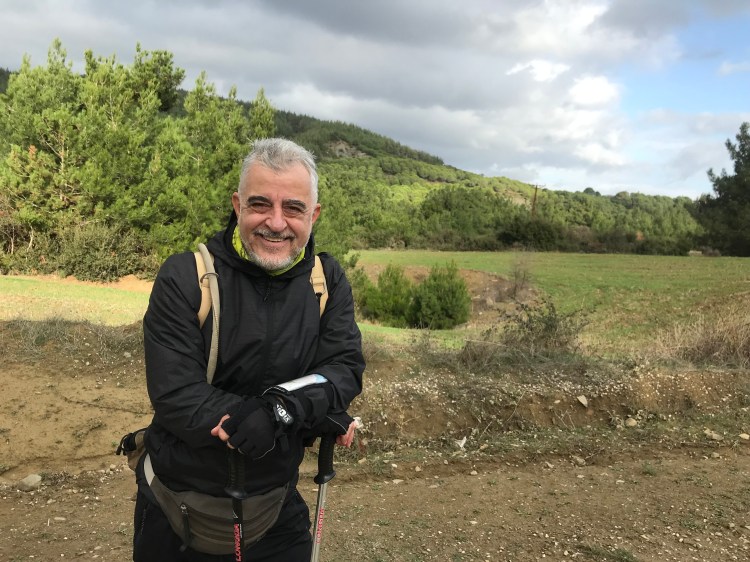
The gravel road stretched across a series of rolling hills on the way to Değirmendüzü, flanked on both sides by scattered pine groves. It offered, without hesitation, breathtaking glimpses of the land’s raw beauty to anyone passing through.
I can’t quite remember another walk I’ve enjoyed this much—perhaps it was the way history seemed to unfold with each step. Knowing the stories held by these lands made the entire experience feel both meaningful and quietly exhilarating.
As I passed through the village of Fındıklı, a small pickup truck caught my eye. It was transporting crates of fresh fruit and vegetables from one village to another. Three people were onboard. The driver—around 55, large-bellied, with a salt-and-pepper stubble and thick moustache—was talking with ease. Despite the time being only 10:30 in the morning, the village appeared utterly still, like it hadn’t yet awoken.
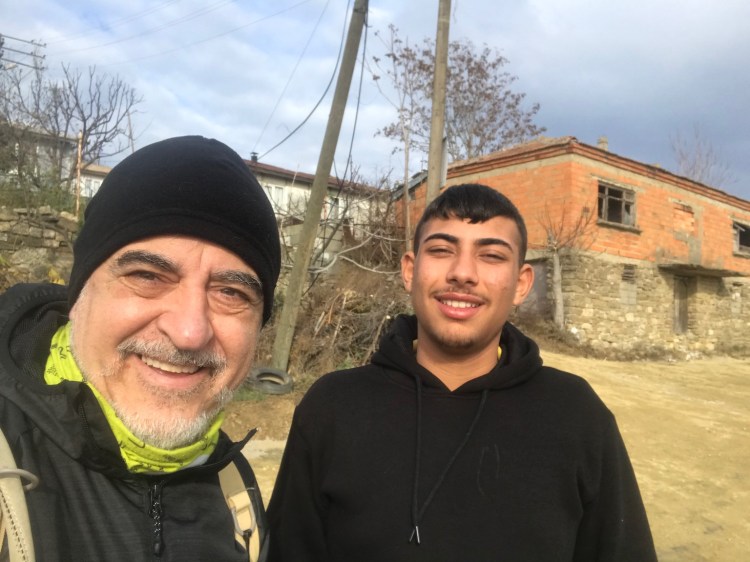
Just then, an elderly woman—perhaps in her seventies—approached from a nearby house, holding a woven basket. The driver clearly knew her. He stepped down, kissed her hand respectfully, and casually tossed the basket to a teenage boy sitting in the back of the truck. The lad, probably sixteen, had jet-black hair and heavy brows, and silently caught the basket mid-air. Without pause, the woman began giving him instructions—what to add, what to remove.
I stood for a moment, quietly observing this interaction. It felt like something from another time—a kind of local exchange that was both practical and steeped in tradition. There was something deeply human in that simple scene, something you couldn’t learn unless you happened to be right there, watching.
A Question Without an Answer
After a while, as the rising sun began to tighten its grip and the lingering scent of dung thickened the village air, I realised it was time to move on. The heat, the smell, the stillness—it was all a gentle but firm nudge back to the road.
Before leaving, I had a quick chat with the teenage boy at the back of the vegetable truck. He fired off a few curious questions, and I answered as simply as I could. But what lingered with me was his puzzled expression—he didn’t quite know what to make of me, or my answers. When I mentioned how far I’d walked, his eyebrows shot up in disbelief. His only real question was: Why?
I knew my answer wouldn’t satisfy him. Still, I said with a smile, “Honestly, I don’t really know why… Maybe to learn things I don’t yet know. Maybe to meet people I’ve never met.”
But he kept staring at me with the same baffled eyes, as if the whole idea still made no sense. And I understood. For him, such a goal was too distant, too abstract—maybe even a little ridiculous.
I walked away smiling, content that at the very least, I’d given him a story to laugh about with his mates that evening. Maybe, one day, it might even mean something more.
The Road That Wouldn’t End
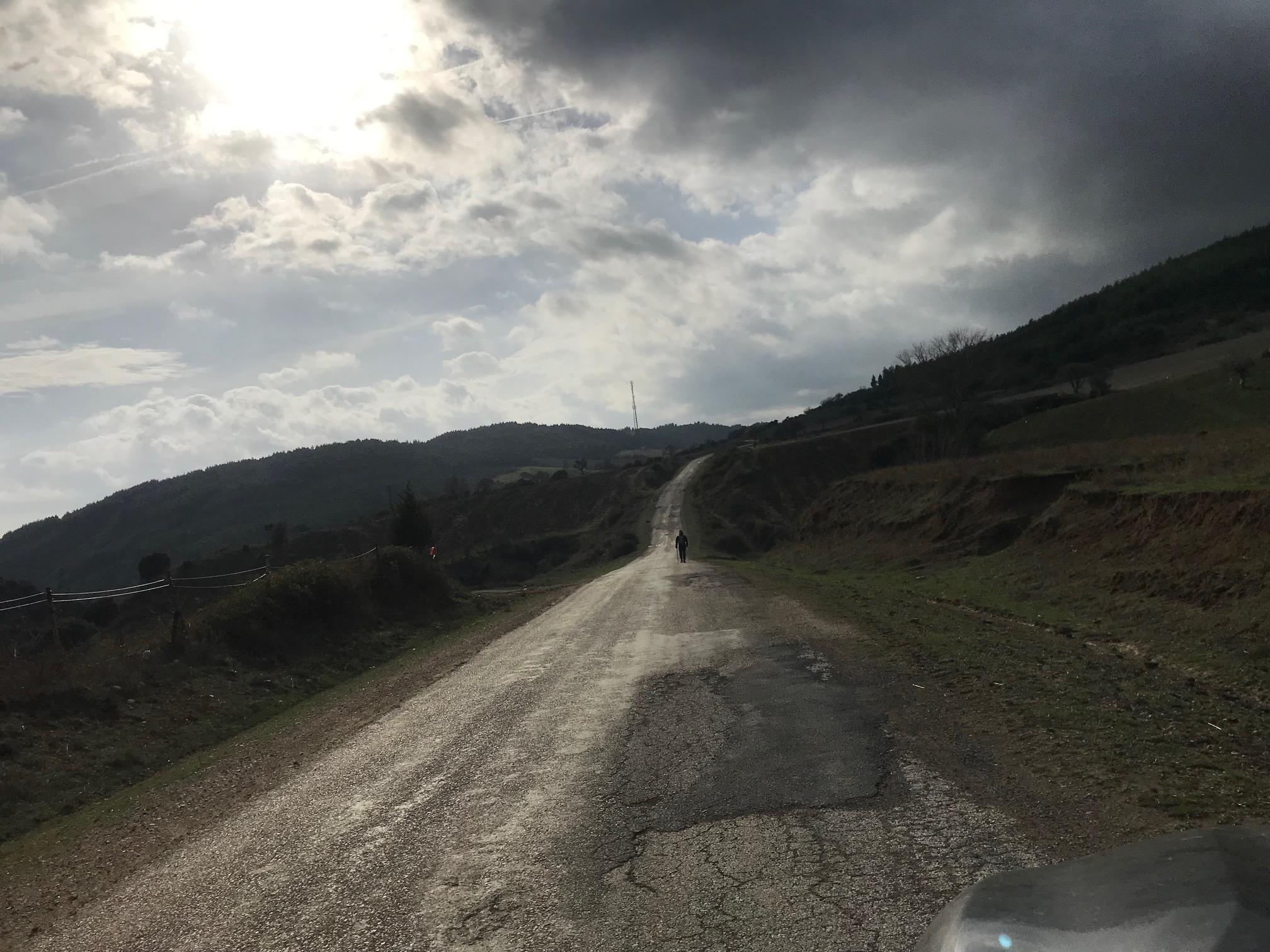
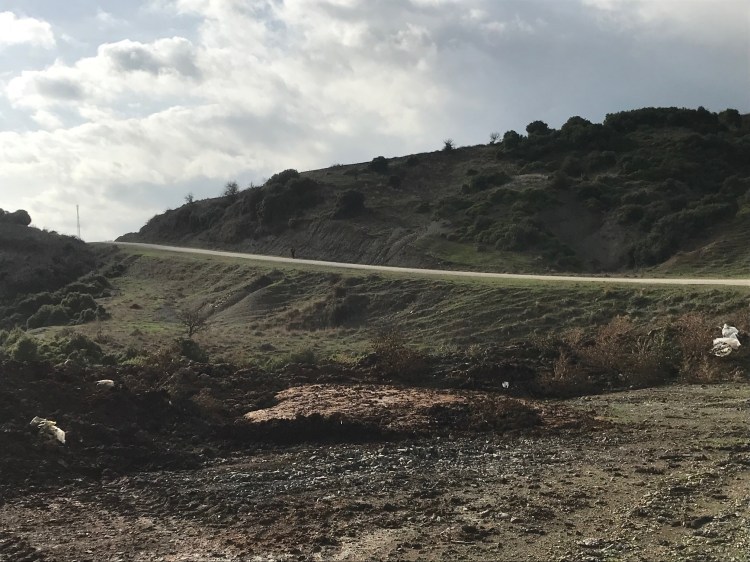
After Değirmendüzü village, the road unfolded into an ever-climbing terrain. Each time I thought I’d finally reached the top of a hill, I’d realise the road was still rising—mocking me, stretching further, always upwards.
It was then that the truth struck me like a stone: for years, I had been training in entirely the wrong environment. My city walks, my workouts at sea level—they hadn’t prepared me for this. Not really. Out here, every step carried the weight of the landscape. And the hills had no sympathy.
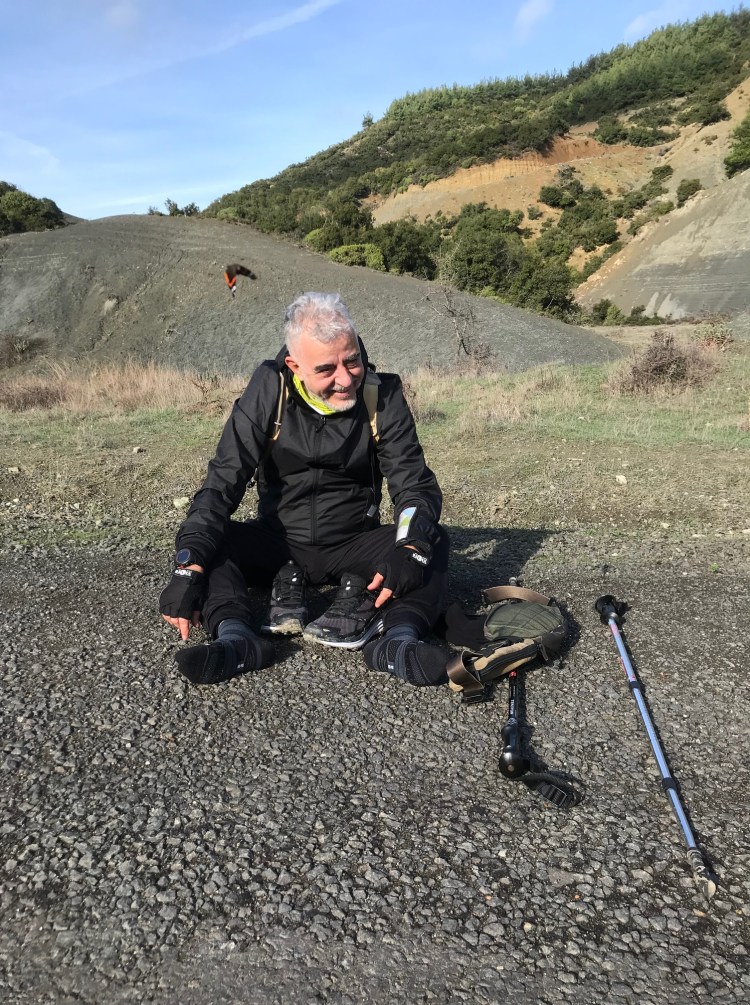
On one particularly punishing incline, something inside me snapped—not in pain, but in surrender. I stopped. Looked around. Then, without a second thought, I stripped off my shirt and sat down right there in the middle of the road.
For a moment, the world was utterly still. No cars. No voices. Just me, my breath, and the sound of wind brushing across the rising earth.

A Quiet Witness
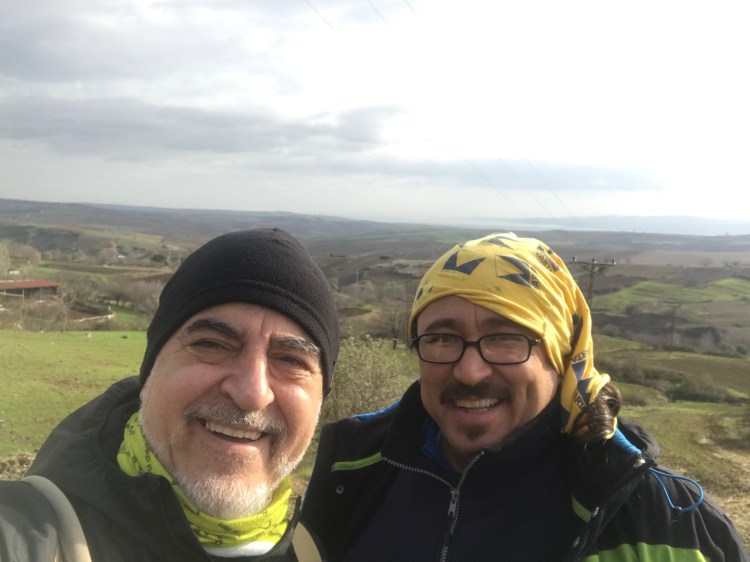
Tamer reached me not long after. Every time he asked how tired I was, I found myself wondering if he was actually sent along to test my patience. There he was again—taking the chance to snap a few photos of me slouched in the middle of the road, sweat-soaked and silent. I simply smiled back at him, saying nothing. It felt like time had come to a standstill.
But just then, as if to gently remind me that the world was still turning, a butterfly appeared—graceful, delicate, unbothered. It fluttered around me, as if inspecting the scene. For a fleeting moment, it even seemed to pose beside this exhausted figure sitting on the warm asphalt. Caught in the frame of our camera, it became the quiet witness to my struggle—and maybe my stubbornness, too.

Racing the Light
I still had 10 kilometres to go before reaching Tayfur Village—my final destination for the second day. We needed to get there before darkness fell and find a suitable place to camp. The road ahead was flanked on both sides by pistachio pine trees, their branches reaching out like quiet companions.
As we passed beneath them, I had a sudden, almost childlike urge to stop and gather the cones scattered beneath the trees—cones packed with precious pine nuts. But there was no time for distractions. I was racing against the fading light, and the shadows were already beginning to stretch across the road.
When we finally reached the outskirts of Tayfur, I noticed something odd. Unlike every other village we’d entered so far, there were no shepherd dogs rushing out to greet—or challenge—us. The silence felt strange, almost hollow. A village with no dogs? That, in itself, felt like a story waiting to be told.
Campfires and Quiet Winds
I met up with Tamer at the entrance of Tayfur Village, marking the official end of our second day on foot. Without wasting a moment, I jumped into the car—still wearing my sweat-soaked hiking shirt—and we headed off towards the dam lake, nestled just south of the village. It was time to rest, eat, and recharge both body and spirit.
We had no trouble finding a good spot to pitch the tent. Thanks to the lessons learned during our damp experience in Güneyli, we knew better than to camp close to the water. The humidity there had taught us well. Here in Tayfur, the air was surprisingly mild, even pleasant.
The higher ground around the dam gave us a better position, and within minutes, the tent was up. While the wind had been strong earlier, it eventually softened into a gentle breeze—almost like the land itself was offering us a moment of peace after a long day’s journey. Later, we planned to stop by the village coffee house to top up our batteries—both literally and figuratively.
Firelight and Reflections
It was as if nature herself wanted us to eat in peace. Within minutes, the wind stilled, and not a single rustle remained to disturb the quiet glow of our campfire, nestled beside our tent.
Dinner was surprisingly elaborate for a makeshift camp meal—tuna noodles with eggs, potatoes, and a fresh salad. A bit of a mix, perhaps, but it hit the spot. Over the meal, Tamer and I agreed on a set of camp duties. Since I’ll be hiking solo during my project in Australia, it only made sense that I’d handle everything myself on this journey too—setting up the tent, preparing meals, and all that comes with it. This walk through the Gallipoli peninsula would be a training ground, and I had to walk it as if I were alone.
As we ate hungrily under the soft, flickering light of the fire, we talked over the day. We laughed again at the curious questions people had asked along the way—those wide-eyed reactions to the idea of walking such a distance. And yet, the day’s questions weren’t over since We hadn’t visited the village coffee house of Tayfur village yet.
The Village Coffee House
The village coffee house stood at the base of a modest two-storey building, just off the traditional square. Out front was a semi-open porch area with a corrugated metal roof, where locals sat and chatted in the fading light.
As we pulled up and parked nearby, our Istanbul license plates clearly caught a few curious eyes—the low hum of conversation dipped for a moment, and several heads turned our way. We offered a polite nod and a quick “good evening,” and just as quickly, the chatter resumed. It was as though we’d passed some unspoken test of village etiquette—acknowledged, but not fussed over.
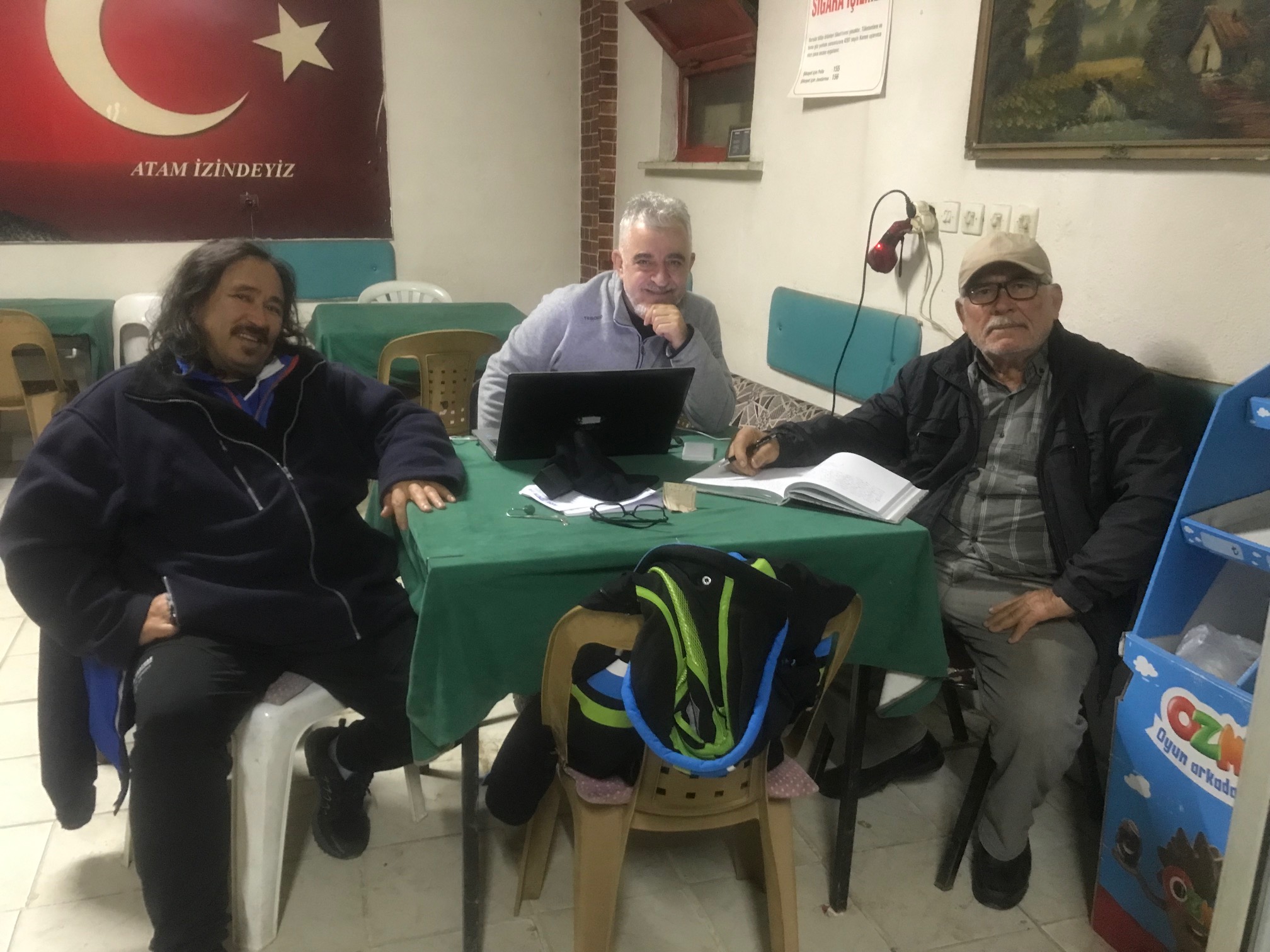
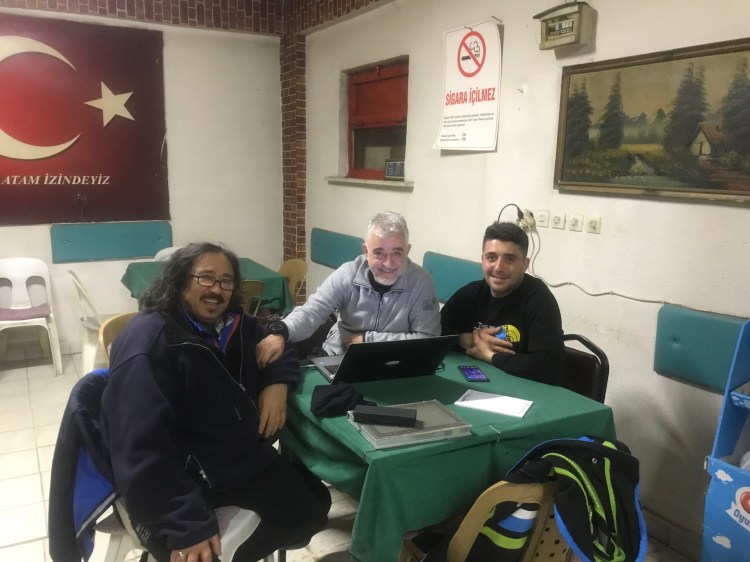
Inside was another large hall, warmed by a gently crackling stove. We found a quiet table in the corner and sat down. A young man in his late twenties—whom we later learned was named Anıl—welcomed us with a friendly smile and a firm handshake. Over the next four hours, Anıl would serve us glass after glass of fragrant winter tea, the kind that warms more than just our hands.
Since I didn’t carry a solar charger with me on the road, these village stops became essential charging points for my devices—phone, GoPro, smartwatch. That night, the Tayfur Village Coffee House became not just a place to recharge our batteries, but also our bodies and minds.
A Gift of Pines and Kindness
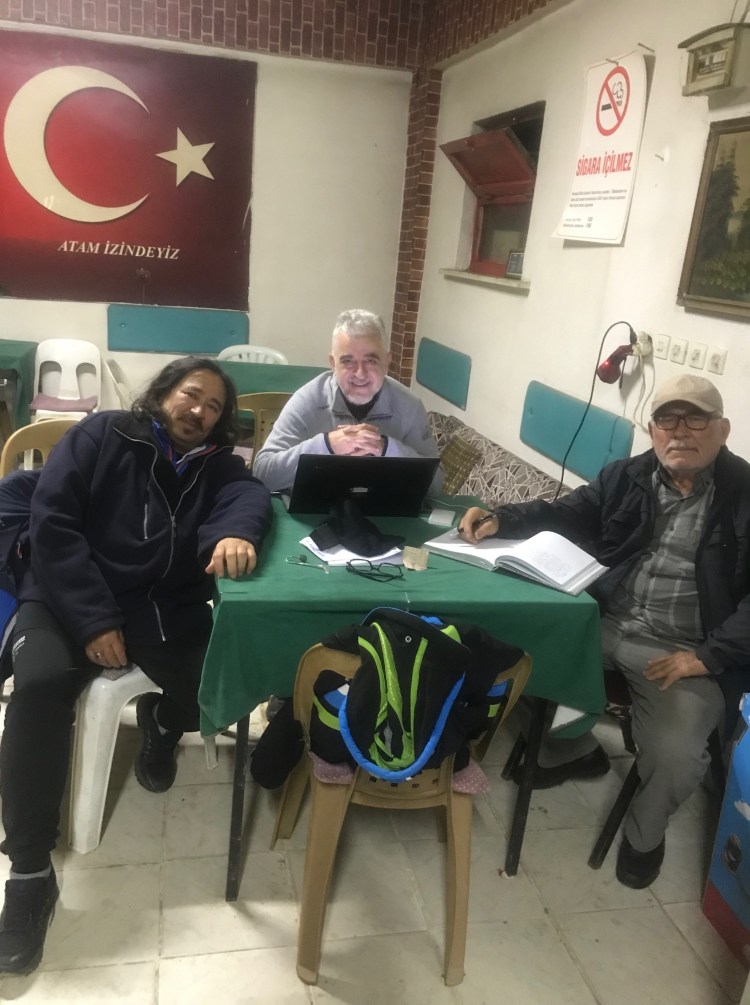
The most meaningful encounter of the second day came in the form of a quiet, four-hour conversation with Kemal, a retired forest ranger whose presence filled the coffee house with warmth and wisdom. With his deep, steady voice, he answered all our questions about trees, nature, and the weather—fields he knew like the back of his hand. But just as curious as we were, Kemal had questions of his own, especially about my long walk.
His most memorable question, delivered with a playful smile, was:
“Isn’t your lady upset you’ve wandered so far from home?”
I replied with a grin, “No, she’s actually happier now.”
We both burst into laughter.
There was something so grounding in his presence—a man living modestly, raising his granddaughter on a tight budget, yet full of life, humour, and dignity. That evening, it wasn’t the meal but Kemal’s company that nourished us. His humanity reminded me of the kind of quiet strength and generosity we often lose in the noise of modern life. Before we left, he penned a few lines in my walking journal—words that carried more meaning than a hundred motivational quotes:
“Dear brothers, you came to our village, we met, we drank tea. Thank you for the lovely conversation. You’re always welcome here. May God bless your path. Thank you. — Kemal Keskiner”
Simple, heartfelt, and sincere—his words stayed with me long after we parted.
But Kemal had one last gift to offer. Earlier that day, I’d longed to stop and collect some pistachio pine cones scattered beneath the trees along the roadside, but time had pushed me forward. Just before we left the coffee house, Kemal quietly handed me a small bag—inside were six pine cones, hand-picked.
It struck me then: in life, there are no real obstacles between good intentions and their fulfilment—except perhaps ourselves. Sometimes, all it takes is kindness in action. We said our goodbyes to the generous souls of Tayfur Village a few minutes before midnight. Back at our tent, the night air was cool and clear, scented with forest and silence. Even the distant howls of jackals and the answering barks of shepherd dogs weren’t enough to disturb our sleep.
Tomorrow would be the third day—a new stretch of road, a new page of stories, and, I was sure, new faces ready to teach us more about this land and ourselves.
 Walkerspirit