
The Day of Days: All Great Beginnings Ask for Courage

Walking Duration: 7 Hours
Walking Distance: 21 km.
Walk Date: 14 December 2022
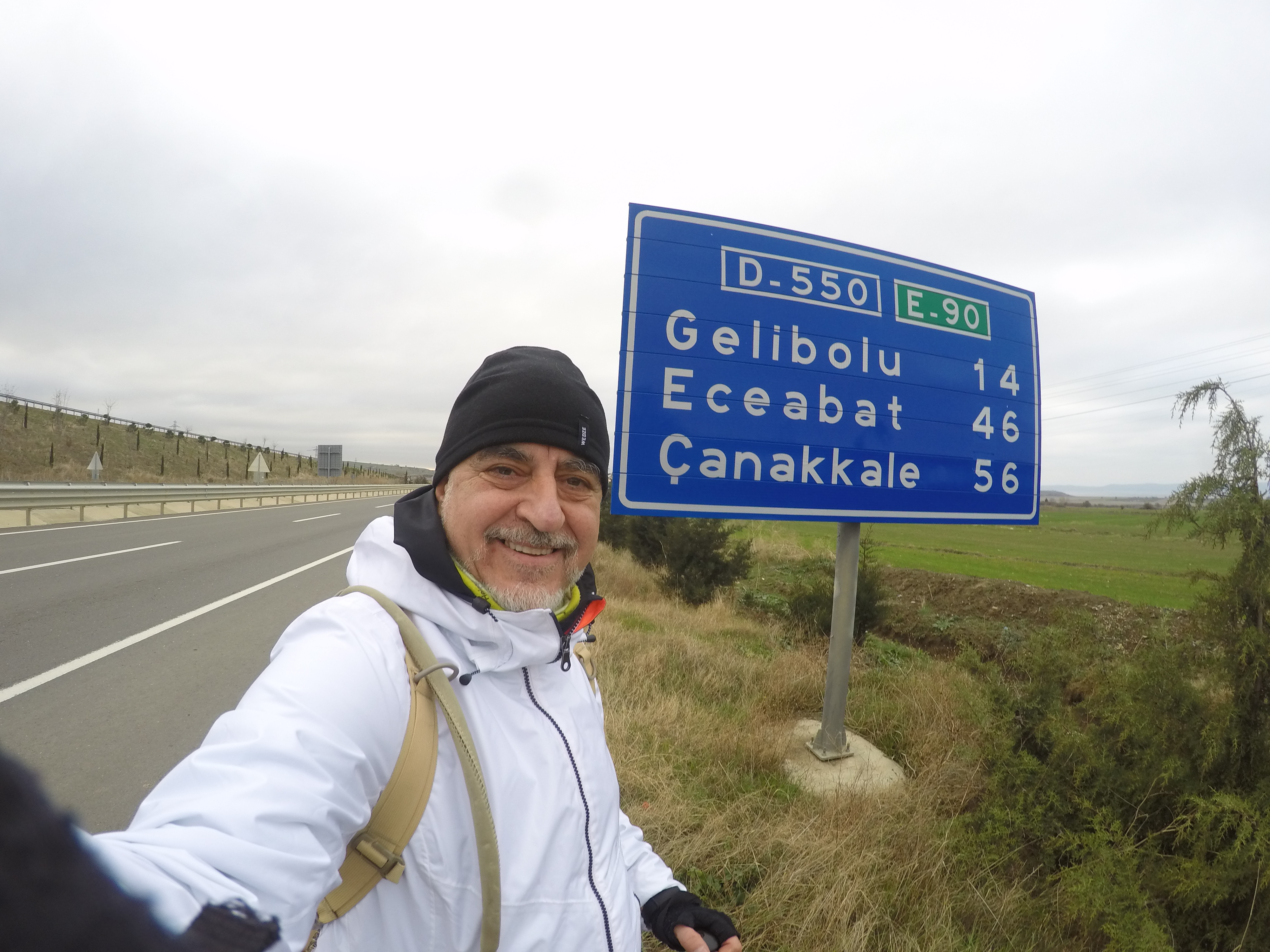
Walking Route: Gelibolu – Bolayır – Güneyli
Day One – Gallipoli to Bolayır: Where the Real Walk Began
I left Istanbul at 3:30am to complete my final long-distance training walk in Türkiye before embarking on my Australian adventure. My first stop was Lüleburgaz, where I picked up my good friend Tamer Karaağaç from the Istanbul Orienteering Club. He would be providing invaluable logistical support for the journey ahead. We reached Lüleburgaz two hours and twenty minutes after setting off, and before the first light of morning broke over the horizon, we were already on the road to Gallipoli.
By the time the sun began to rise, we had arrived. We wandered through Gallipoli’s quiet streets — nearly empty except for a few early risers — and then made our way down to the Hamzakoy region. Stepping out of the warm car, I was met by a biting wind that cut straight through me. The Dardanelles are famous for their winds and strong currents, but no one truly wants to feel that chill in the heart of winter. I had prepared for it — though I must admit, not quite for the cold whip of that current.
Over tea and ready-made sandwiches in the car, parked in Hamzakoy, we reviewed our five-day walking plan. After going over the day’s route in detail, we drove to the Gallipoli Military House — the official starting point of my walk. I changed into my hiking clothes, did a final check of my gear — camelback water bag, mobile phone, snacks, GoPro, and perhaps most importantly, an acoustic dog repellent device.
Unlike many other countries, in Türkiye, cats and dogs roam the streets freely. Most of the street cats are strays, but the people care deeply for them and regularly feed them. With dogs, however, things are different. Stray dogs are common, and if they’re untagged, it’s generally best to keep your distance. In rural areas and village outskirts, you have to be especially cautious — this is Kangal country. These shepherd dogs can be one and a half times your size, and if they’re roaming in packs or defending their territory, you’d best stay alert.
That’s exactly why I carried my dog repellent — not to harm, but to avoid any unfortunate situations.
The first day of walking is always a kind of mirror for the days to come. My goal was simple: walk fast, reach the planned destination early, find a good campsite before dark, and rest as soon as possible. I think I managed all of that.
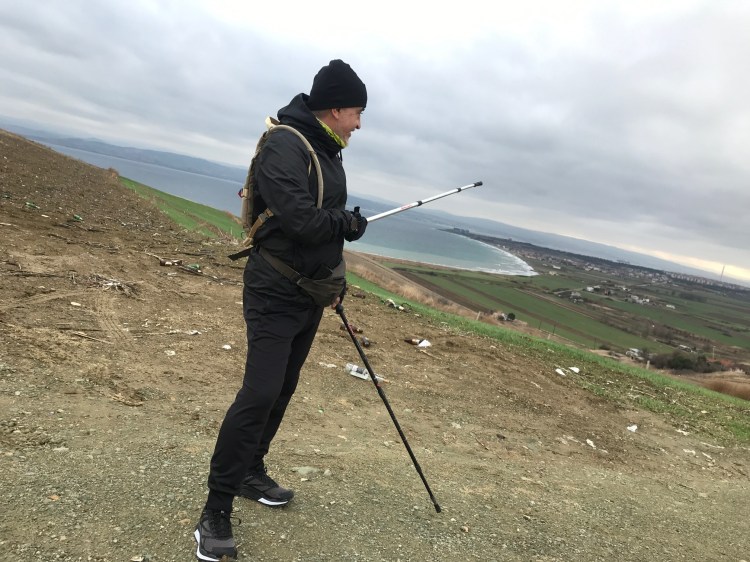
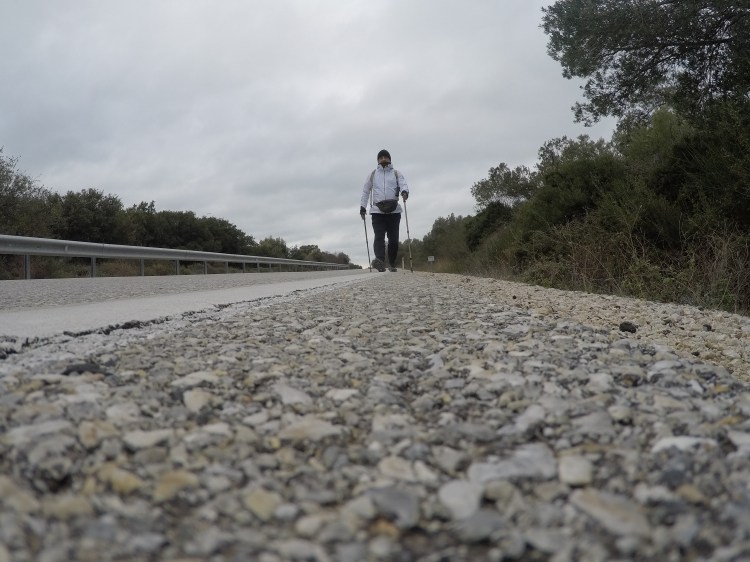
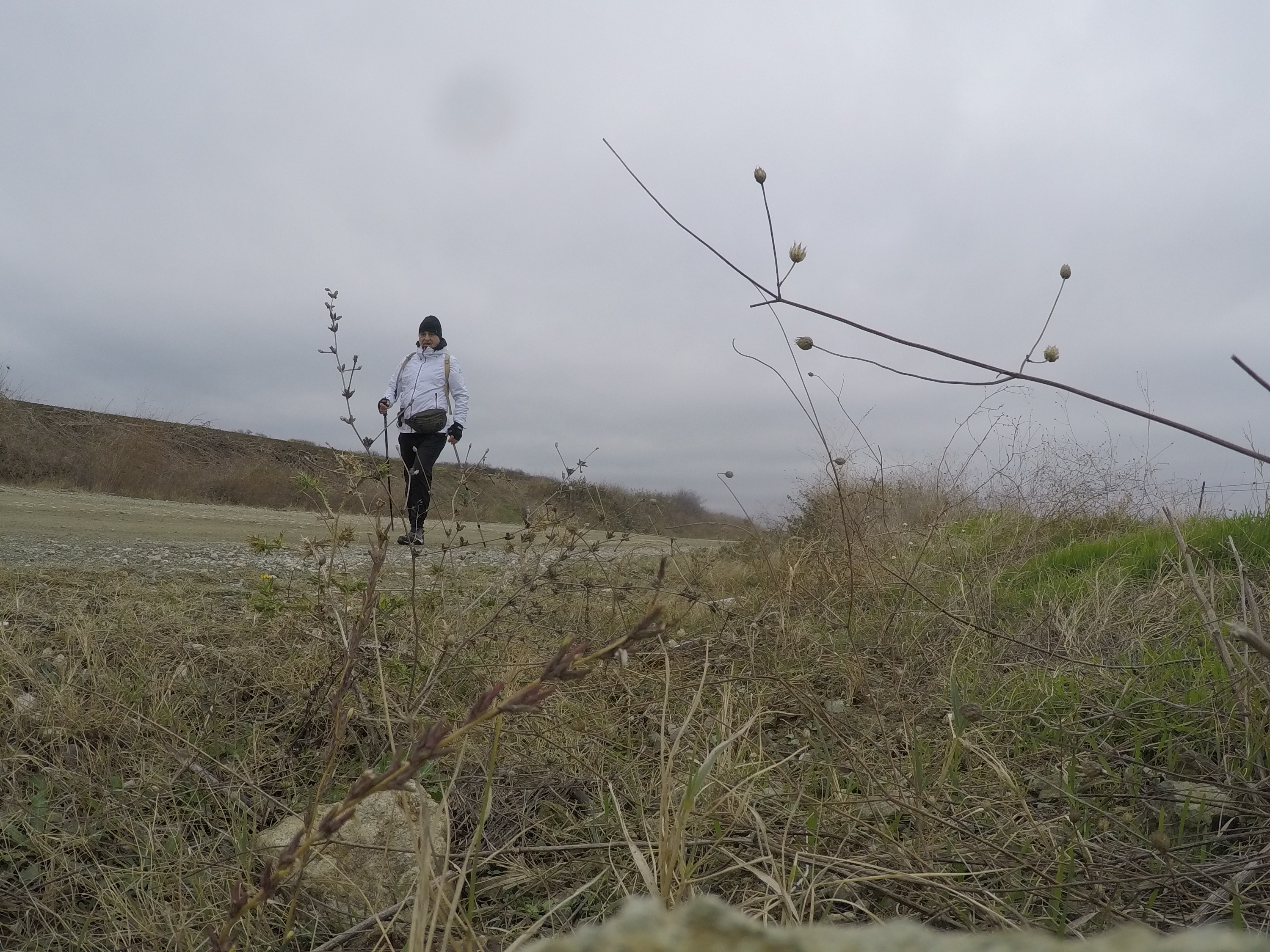
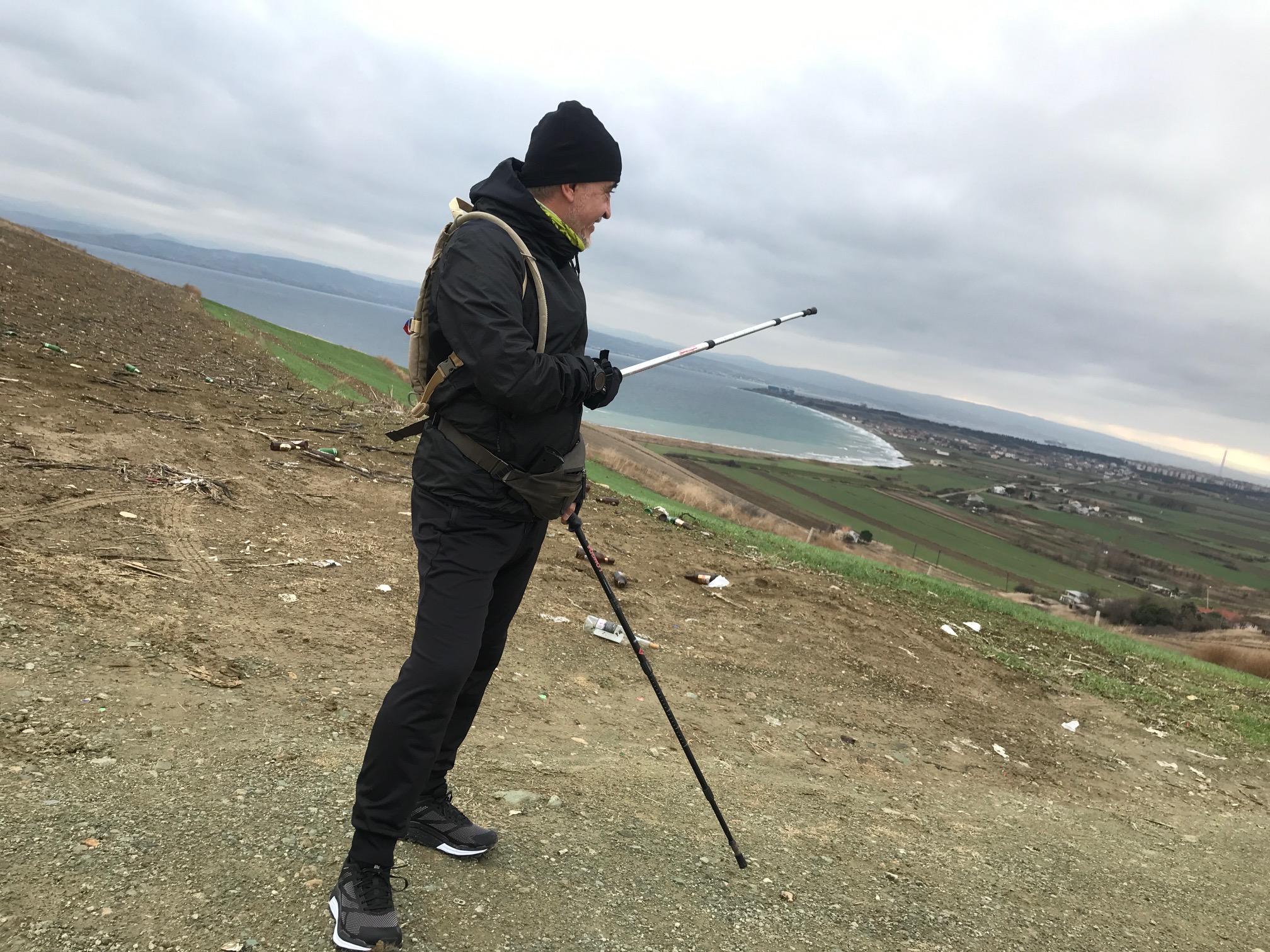
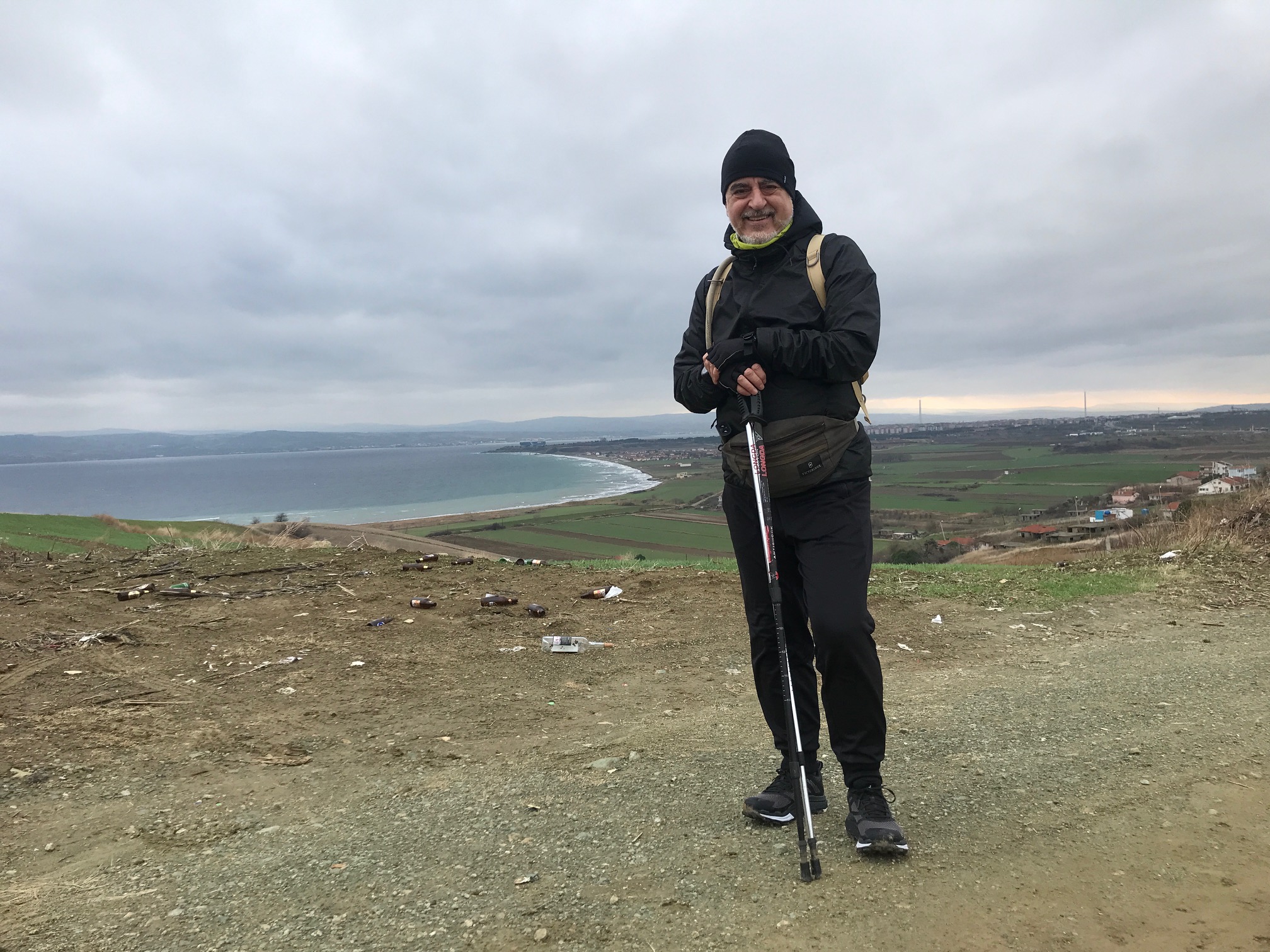
My target for the day was Bolayır village. Though it was still cold and windy when we left Gallipoli, the temperature slowly began to rise as my body warmed up with the pace. As expected, I had my first encounter with shepherd dogs just before reaching Bolayır. While trying to keep my adrenaline in check and stay calm, I used my acoustic device effectively — without causing any harm, of course. But I know too well how fiercely a dog can defend its territory. These barking children of the steppe came at me without hesitation, and in that moment, I had no choice but to rely on the device to keep the peace.
When we arrived in Bolayır village, our first mission was to find a spot for lunch. We began unloading food from the car and laid it out across two marble tables in front of the village mosque. Of course, the local dogs and cats didn’t hesitate to join our little feast — eager and uninvited, but very welcome guests.
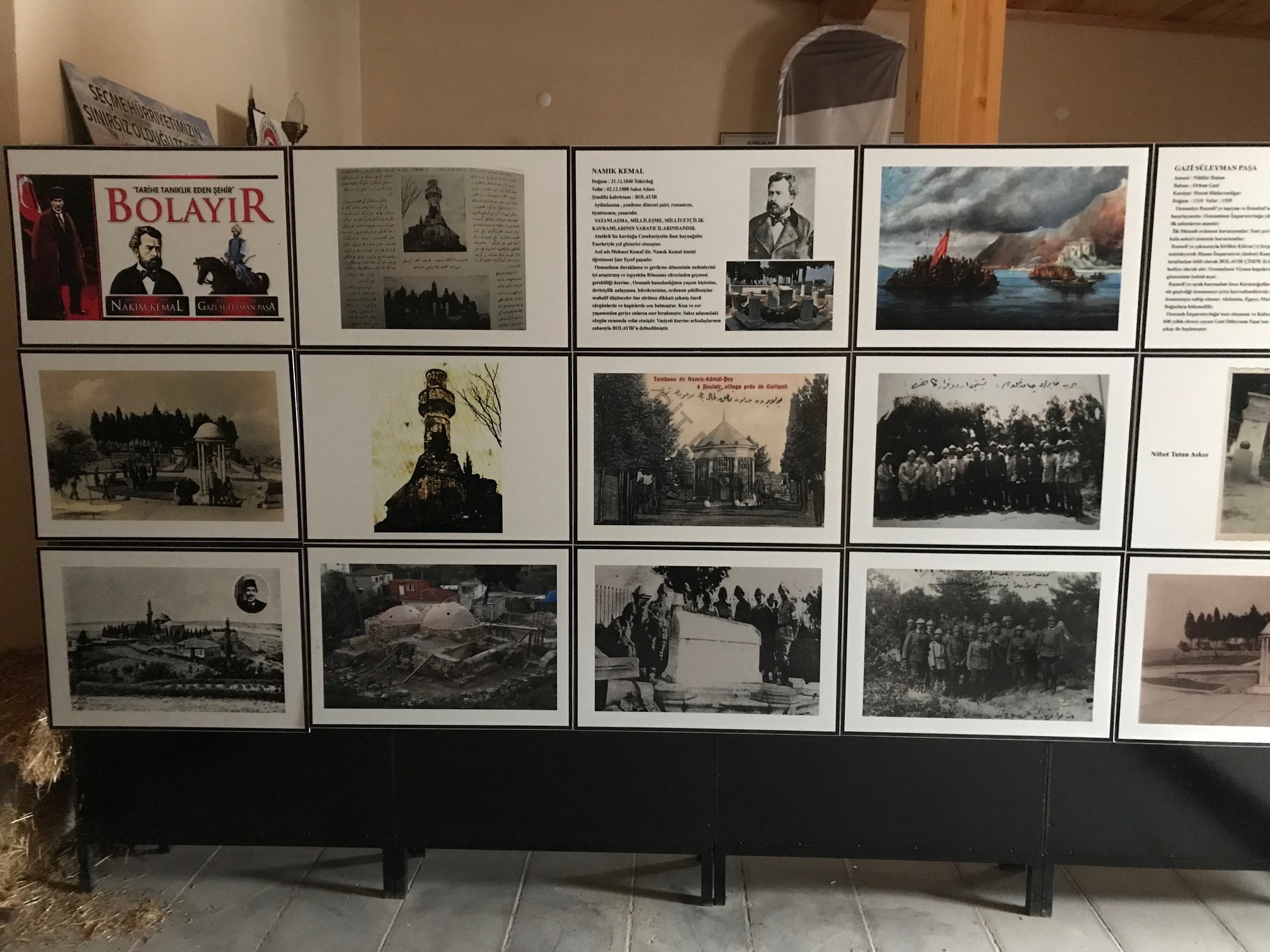
As we sat in the village square, we took a moment to read through the large information board, which told stories of Bolayır’s place in history — including its role during the Çanakkale battles. It was humbling to stand where so much had happened, where time had left deep footprints.
Soon after, we met Adnan, the village headman. When he learned that I had walked all the way around the Gallipoli Peninsula, he was genuinely surprised and offered his praise with modest but heartfelt words. Then, with a cheeky smile, he added, “I figured you must be a stranger — you had lunch on the musalla stone!”
We couldn’t help but laugh. In Islamic tradition, the musalla stone is the slab on which the deceased’s coffin is placed during funeral prayers. Apparently, we had unknowingly turned it into a lunch table — not quite what it was meant for.
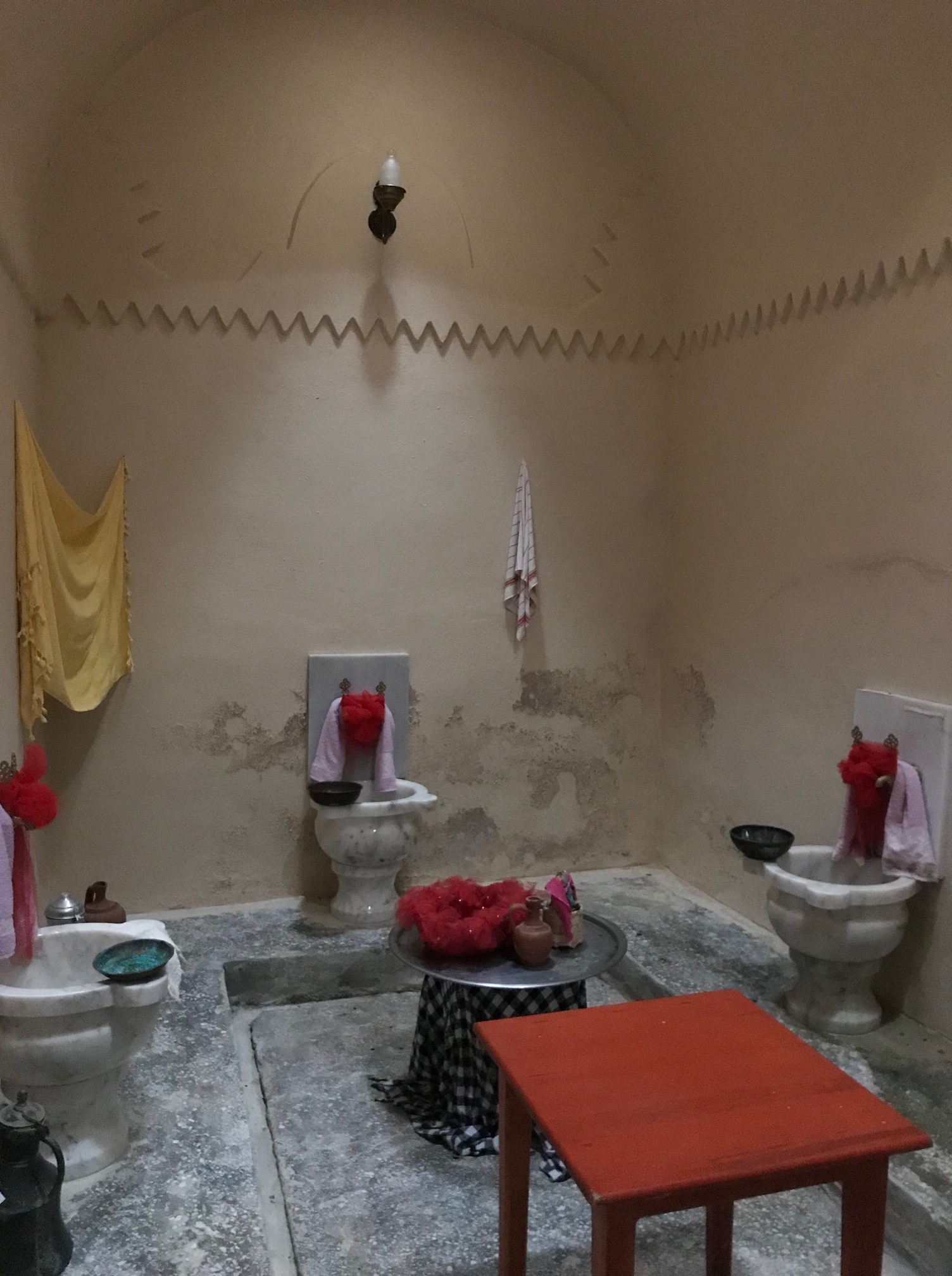
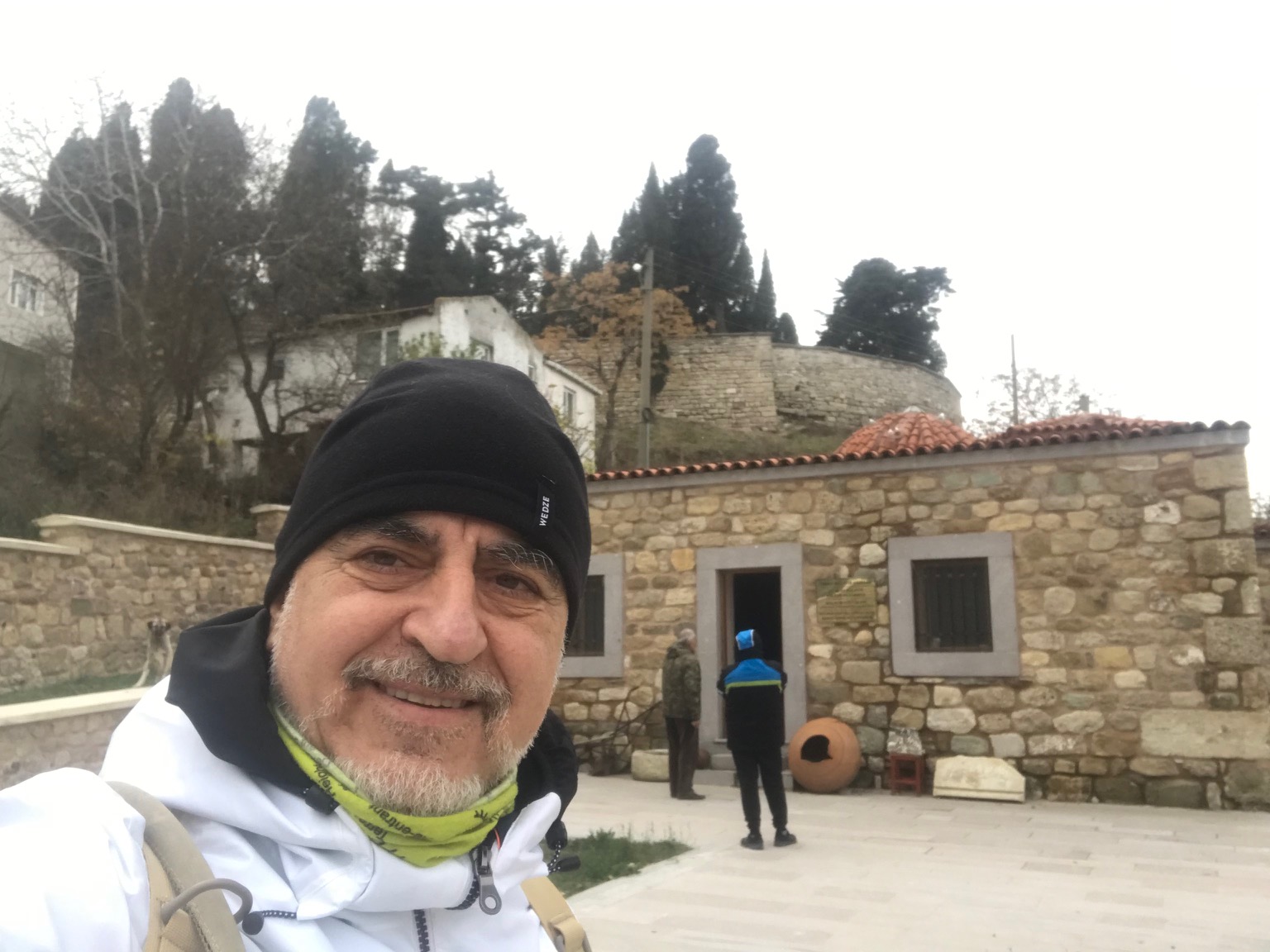
After recovering from the unexpected surprise of our lunch spot, Brother Adnan — the village headman — kindly offered to show us around. He first took us to the old Roman bath, which had been under restoration for some time. Then we visited the village museum, where relics and military equipment from the Çanakkale War were on display.
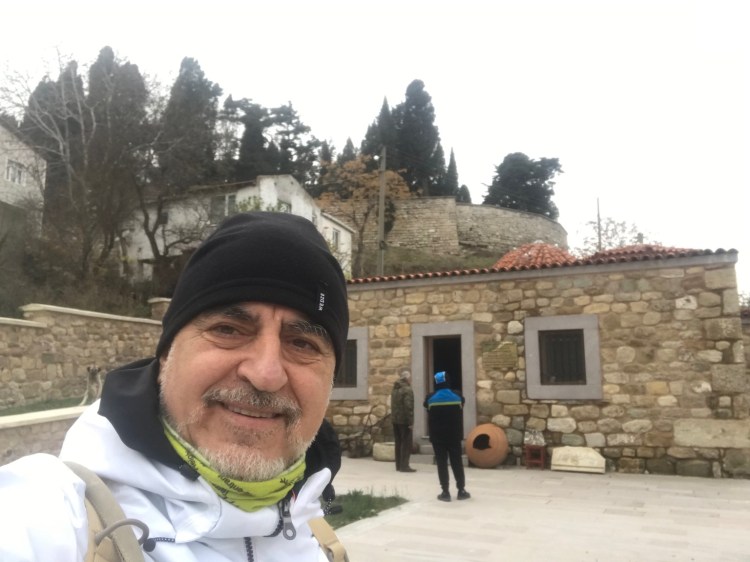
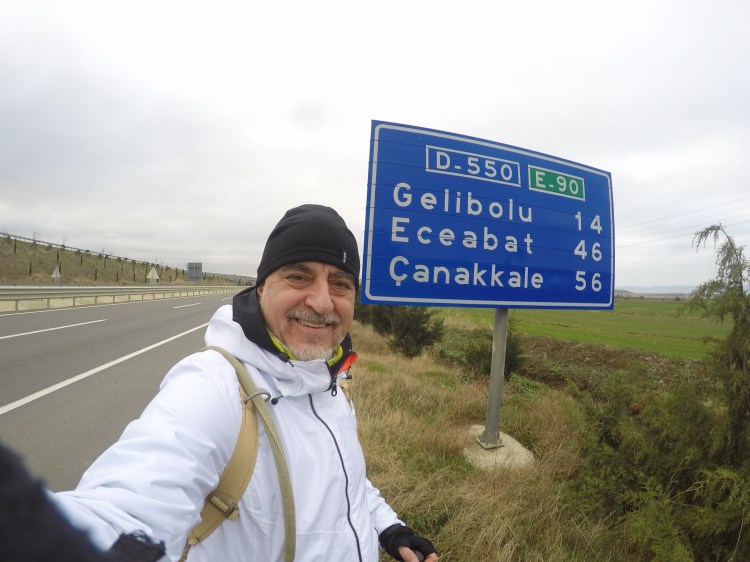
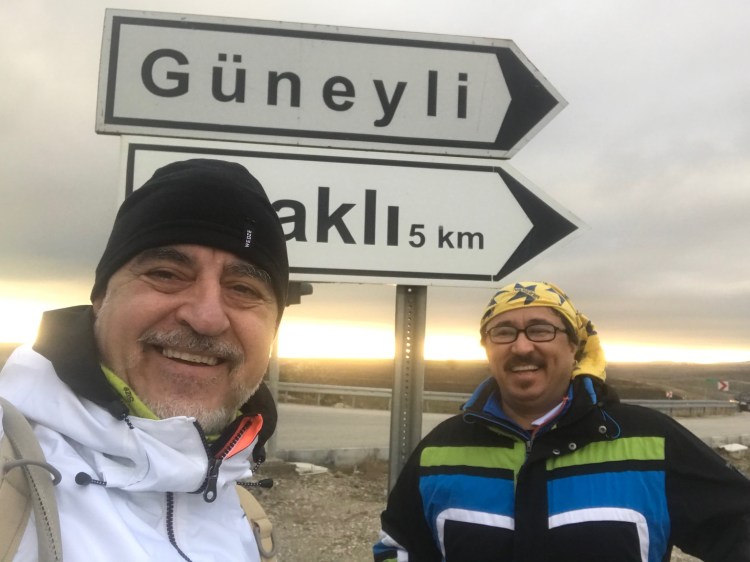
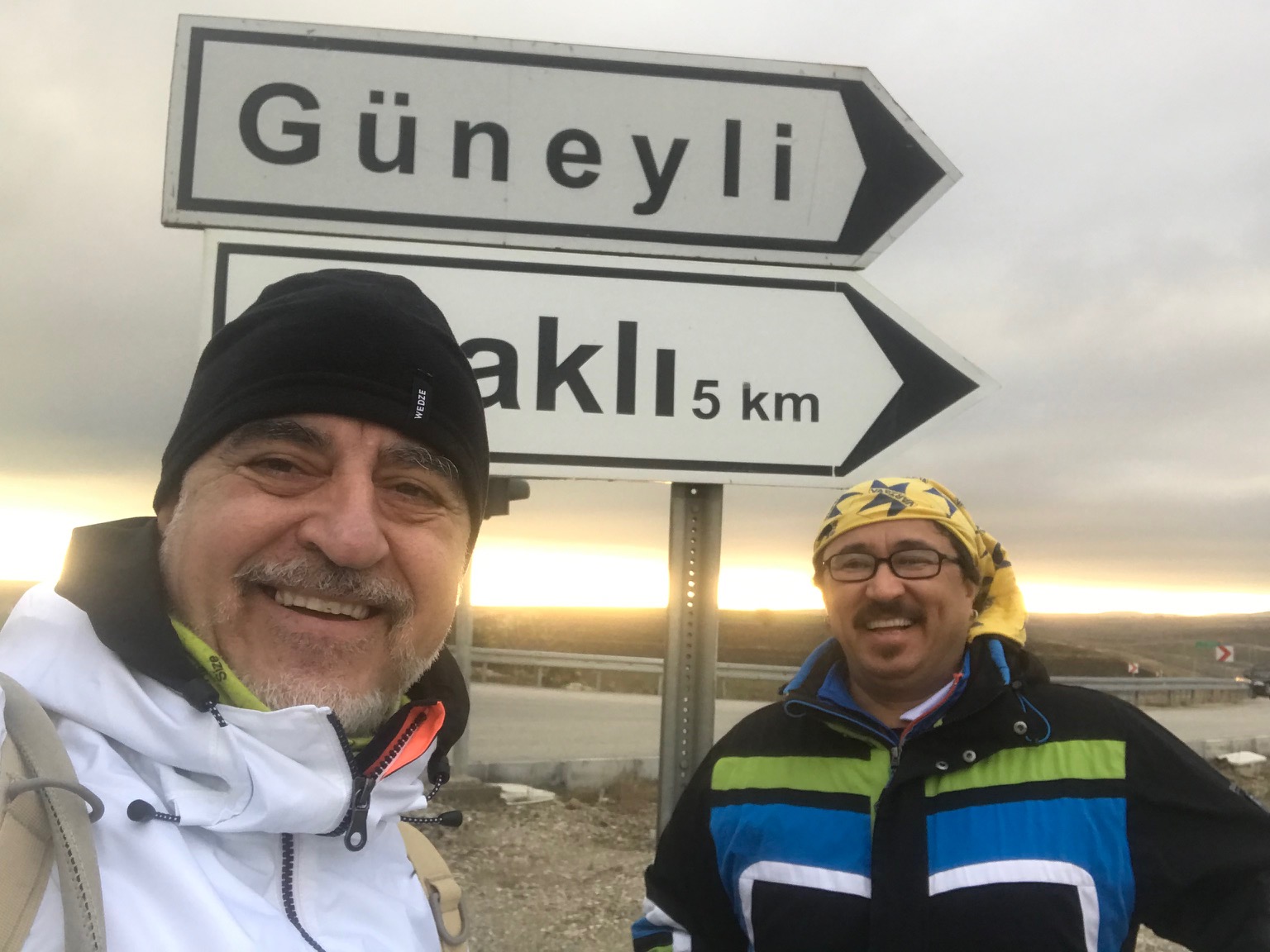
We left Bolayır at 2:00pm, grateful for the warm encounter and the stories we’d shared. As usual, I walked ahead while Tamer followed behind in the support vehicle. We had a 10-kilometre stretch ahead of us, leading to Güneyli Village. Shortly after leaving Bolayır, we merged onto the highway. For safety reasons, it wasn’t ideal for Tamer to trail me slowly or stop along the shoulder, so I asked him to drive ahead and wait at the Güneyli turn-off. About an hour later, we reunited at the junction — with just 4.5 kilometres left to go. As I’d half-expected, a welcoming committee had already gathered at the village entrance: several four-legged locals, tails high and barking boldly. After offering them my sincere thanks (and a few cautious nods), I made my way to the end point of the day’s walk — the village mosque.
After changing out of my sweat-soaked hiking gear into something dry and comfortable, we headed to the village headman’s office to ask where we could set up camp. With typical Turkish hospitality, they told us we were welcome to pitch our tent wherever we liked. They also suggested we check out the coastal section of Güneyli village, which was home to many holiday houses and popular with summer visitors. We took their advice and drove down to the sea.
Although there were plenty of summer homes around, the place was eerily quiet — not a soul in sight. We spotted one small grocery store still open by the water. A few dogs wandered about, but it didn’t take long for us to realise who really ruled the area: cats. Not just a handful, but dozens of them — roaming, watching, lounging. If you were a mouse in this village, life must have been hell.
As we searched for a good place to pitch the tent, the sky had already grown dark, and we were running out of daylight. I wasn’t too keen on setting up camp in the pitch black. Just as we’d picked a rough spot, a man — maybe around 65 — emerged from the shadows. He was dressed head to toe in fishing gear: slick raincoat, beret, and big rubber boots. Laughing, he called out to us:
“What are you looking for at this hour, mates?”
Tamer answered, “We’re just looking for a spot to pitch our tent.”
The fisherman’s bearded face lit up with a grin. “Forget the tent! Go to the Blue Hostel just up the road and tell them the fisherman sent you,” he said, still chuckling. As he spoke, the faint scent of alcohol drifted over to us — and that’s when I noticed the pile of beer cans on his lap, at least ten.
Now it was my turn to laugh.
“Who are you exactly?” I asked. “We’ve got to say who sent us.”
He waved a hand casually. “Just say it was the fisherman — they’ll know,” he replied, still chuckling as he wandered off toward the jetty.
Tamer and I looked at each other and burst out laughing. We assumed he must’ve been the village eccentric.
Curious, we drove towards the jetty. There, we saw a few fishermen preparing for a night out on the only boat moored there. As we parked, a tall man — maybe in his mid-30s — approached us with a friendly smile.
“Good evening! How are you fellas?” he asked. “Need a hand with anything?”
“We’re just looking for a camping spot for the night,” we explained.
He pointed to a small beach tucked in on the western side of the pier, explaining it would offer good shelter from the strong winds expected overnight.
As we chatted, we told him — still laughing — about the fisherman who’d offered us directions to the mysterious Blue Hostel. That’s when the best part of the night unfolded.
The young man pointed to the boat and asked if the man we spoke to was the one now working with the nets. We turned and there he was — our beer-sipping fisherman — laughing, waving, and shouting across the water:
“Haven’t you gone to the hostel yet?!”
The young man turned to us and said with a grin, “That’s the owner of the Blue Hostel.”
Tamer and I were doubled over laughing.
We pitched our tent quickly and got dinner underway. But the night had one more surprise in store. As we unpacked the food, we realised we were surrounded — dozens of cats had crept out of the shadows and were now circling the car like a furry siege army. We’d barely started eating when I noticed eight of them had already climbed inside and were busy tearing into the pitas my wife had packed for us.
Reluctantly, I tested out my dog-repellent device on the cats — and to my surprise, it worked like a charm.
Our first dinner of the five-day journey: menemen with baby potatoes. Simple, satisfying. I can’t say I remember how well I slept that night, but when I woke in the morning, my whole body ached.
The next morning, we drove back to where the walk had ended the day before — near the village mosque and café. We recharged ourselves with a couple of simits and strong black tea at the public café. As we sat there, Tamer and I quietly watched the lively debates unfolding among the villagers. The mood was intense — it felt like the arguments could boil over at any moment. Unsurprisingly, the topic was politics: the upcoming presidential election.
Since I’ve never enjoyed political talk, we finished our second glass of tea and slipped out.
I changed back into my walking gear near the mosque, double-checked my equipment, and set off for Day 2 at 8:30am.
The first surprise of the day was waiting for us just 350 metres down the road…
 Walkerspirit